
Spray Paint vs. Industrial Maintenance Aerosols: Which One Fits Your Project?
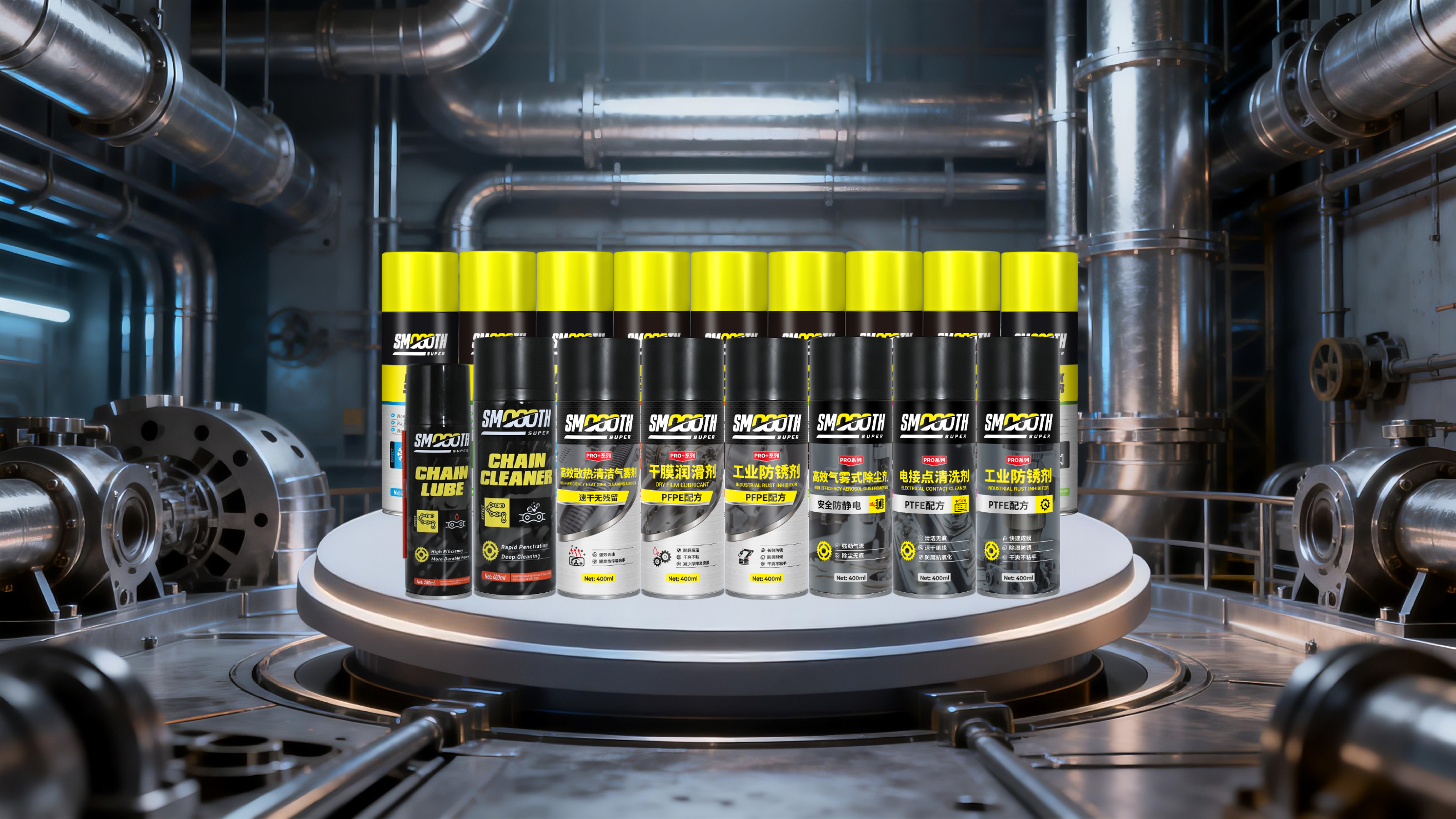
Short answer: the choice between a spray paint aerosol and an industrial maintenance aerosol is decided by job function and intended industry, not by can size. LAYA's spray paint aerosol (model QL-0000450) is classified for Public & Commercial Services and Home & Daily Life, which is where surface coating, touch-up and refinishing work sits. The industrial maintenance aerosol (model SM-0000400) is classified for Industrial & Manufacturing, which is where equipment and plant upkeep sits. Both are tinplate aerosols offered in 300 ml, 400 ml, 500 ml and 600 ml, and both use the same four can dimensions — so the two lines can be planned against a single packaging footprint while still serving two different programs.
This guide compares the published specification sets of the two products field by field, explains what the specifications do and do not cover, and then walks through a six-step selection process that a procurement manager, distributor or brand owner can apply before committing to a program. The two aerosol products sit inside a wider portfolio that also includes insecticide spray, air freshener, household cleaning aerosol, car care aerosol, disinfectant aerosol and aviation aerosol, all produced by Guangdong Laya New Chemical Technology Co., Ltd. (LAYA).
Problem Definition: Why the Two Products Look Interchangeable
Put the two cans side by side on a bench and the specification sheet gives almost nothing away. The spray paint aerosol (QL-0000450) is made of tinplate, and so is the industrial maintenance aerosol (SM-0000400). Both are available in the same net content range of 300 ml, 400 ml, 500 ml and 600 ml. Both are built in the same four can dimensions: ∮52×195 mm, 65×158 mm, 65×200 mm and 65×240 mm. Neither product requires special supporting equipment, because both use a built-in nozzle and are operated by manual spray.
The separation appears in three fields that are easy to skim past:
- Product classification. One product is classified as a spray paint aerosol; the other belongs to the Industrial Maintenance category.
- Intended industry. The spray paint aerosol is intended for Public & Commercial Services and Home & Daily Life; the industrial maintenance aerosol is intended for Industrial & Manufacturing.
- Application context. One serves surface-coating and touch-up work; the other serves maintenance work on equipment and production assets.
This is where mismatches originate. A coating product specified into an industrial maintenance program will not match the documented function the maintenance team expected, and a maintenance-class product bought as a consumer coating will not match the intended-industry field on the artwork, label and import documentation. Because the two lines share can geometry, nothing on the outside of the can flags the difference. The specification, not the packaging, is the first filter — and the formulation confirmation is the second.
Industry Background: Two Segments Inside One Growing Aerosol Market
The global aerosol market was estimated at approximately USD 100.49 billion to USD 100.87 billion in 2025, with projections reaching over USD 211 billion by 2035 (Precedence Research; Market Research Future). Europe accounted for roughly 33.88% to 36.3% of 2025 revenue, while Asia-Pacific is expected to record the highest CAGR through 2033 (Grand View Research; Precedence Research). Aluminium-based aerosol cans held an estimated 61% to 62% of the market in 2025 on the strength of recyclability and lightweight properties (Grand View Research; Market Reports World). In China, the aerosol propellants market alone was valued at USD 1,275.71 million in 2024 and is projected to reach USD 2,194.62 million by 2033 at a CAGR of 6.23% (Reed Intelligence).
Those headline numbers should be read with a caveat that matters to planners: published estimates diverge. 2025 global market size has been reported between USD 94.4 billion (Grand View Research) and USD 100.87 billion (Market Research Future) depending on research scope, and 2026–2035 CAGR forecasts range from a conservative 1.75% (Market Research Future) to 7.73% (Precedence Research). For a buyer, the practical conclusion is not a growth rate — it is that demand is distributed across distinct application classes, and those classes carry different specification logic.
Two of those classes sit at the centre of this comparison. Coating aerosols serve finishing work: applying a colour or protective layer to a surface, including touch-up and refinishing. Maintenance aerosols serve asset upkeep: cleaning, decontaminating and treating surfaces and equipment in industrial and manufacturing environments. The documented project types behind LAYA's aerosol range reflect both segments — household daily use, automotive maintenance, industrial equipment maintenance and aviation cleaning projects — and the documented function set across the range includes surface cleaning, decontamination, rust prevention, disinfection, odour elimination and pest control. This application profile is documented as common in multiple countries, including Germany, Singapore and Australia.
Detailed Solution: The Two LAYA Products, Field by Field
LAYA (Guangdong Laya New Chemical Technology Co., Ltd.), established in 1992, is a national high-tech enterprise specialising in aerosol R&D, manufacturing, sales, and OEM and ODM services. The company employs approximately 300 staff and operates a 100,000 m² manufacturing facility that includes 50,000 m² of modern standard workshops, 14 advanced filling lines and an annual production capacity of 200 million cans. Its technical centre contains 4 product development laboratories and 7 analytical testing laboratories, supported by a 15-engineer R&D team. Export business accounts for 20% of total sales, with major markets in Central Asia, the Middle East, Africa, Russia and Brazil. Both products compared here are manufactured inside that same system, which is why the two lines share can formats.
Spray paint aerosol — model QL-0000450
The spray paint aerosol is a tinplate aerosol classified as a spray paint aerosol and intended for Public & Commercial Services and Home & Daily Life. Available net contents are 300 ml, 400 ml, 500 ml and 600 ml, with can dimensions of ∮52×195 mm, 65×158 mm, 65×200 mm and 65×240 mm.
- Model: QL-0000450
- Material: tinplate
- Net content: 300 / 400 / 500 / 600 ml
- Can dimensions: ∮52×195 mm, 65×158 mm, 65×200 mm, 65×240 mm
- Intended industry: Public & Commercial Services; Home & Daily Life
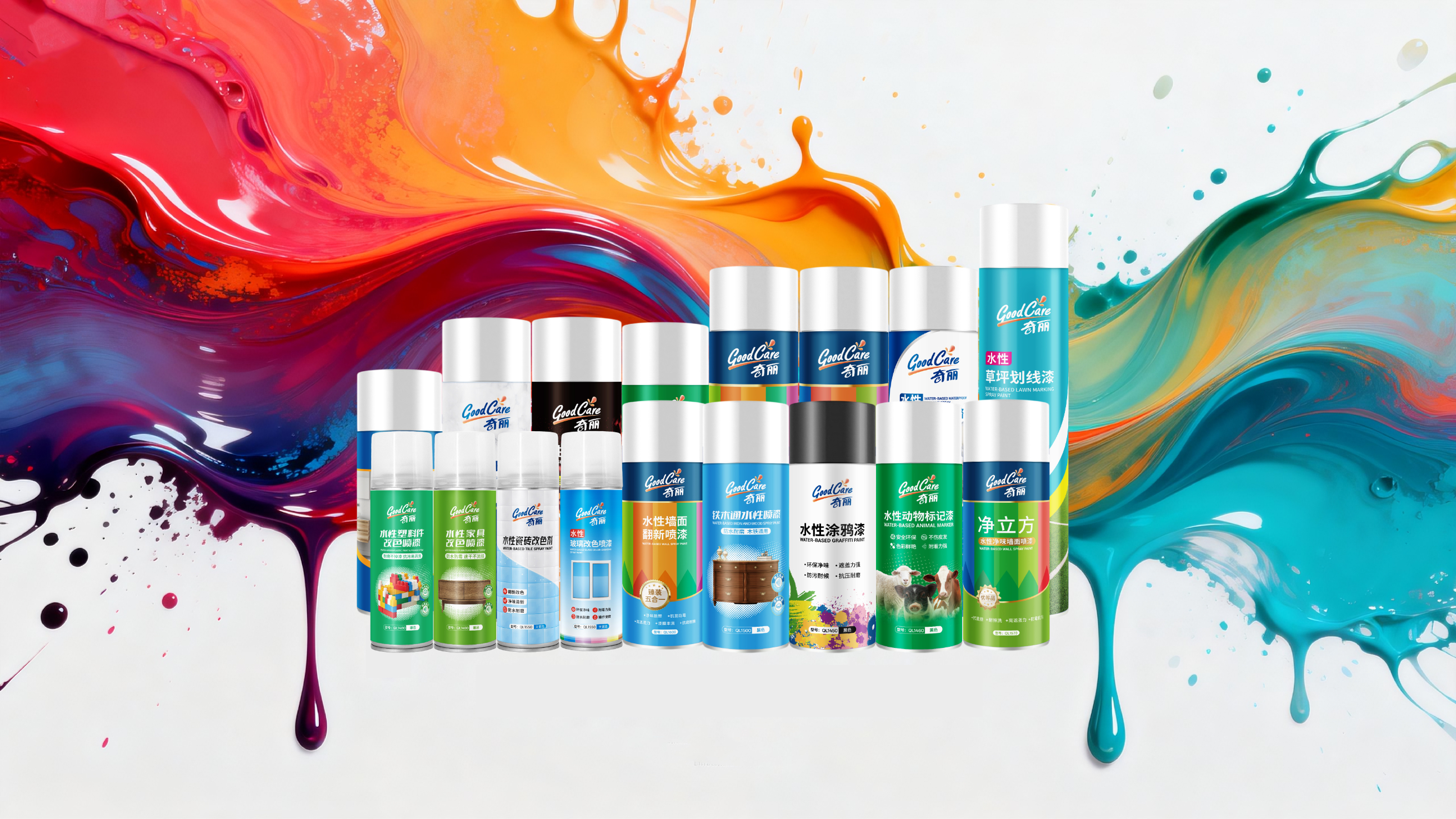
Industrial maintenance aerosol — model SM-0000400
The industrial maintenance aerosol is a tinplate aerosol in the Industrial Maintenance category, designed for industrial maintenance scenarios and intended for the Industrial & Manufacturing industry. It is offered in the same net content range — 300 ml, 400 ml, 500 ml and 600 ml — with corresponding can dimensions of 300 ml: ∮52×195 mm; 400 ml: 65×158 mm; 500 ml: 65×200 mm; and 600 ml: 65×240 mm.
- Model: SM-0000400
- Category: Industrial Maintenance
- Material: tinplate
- Net content: 300 / 400 / 500 / 600 ml
- Can dimensions: 300 ml ∮52×195 mm; 400 ml 65×158 mm; 500 ml 65×200 mm; 600 ml 65×240 mm
- Intended industry: Industrial & Manufacturing
What the published specification covers — and what it does not
Reading a specification accurately is part of choosing accurately. For these two models, the published data defines the model code, category, can material, net content options, can dimensions and intended industry with precision. That is enough to match a product to a market and to plan packaging, artwork dimensions and logistics.
What the published model-level data does not do is assign individual function claims — rust prevention, disinfection, odour elimination and so on — to a single model. Those functions are documented for the LAYA aerosol range and its application profile as a whole. Buyers who need a specific performance claim for a specific SKU should therefore confirm the formulation behind that SKU before the label text is finalised, rather than assuming that range-level functions transfer automatically to every model. This is also where custom formulation and OEM/ODM work begins: LAYA provides aerosol R&D, manufacturing, sales, and OEM and ODM services, so a program can be specified around the function set the project actually requires.
One further point on flexibility: the 300–600 ml format set is the standard geometry for these two lines, but it is not the outer limit of the portfolio. The aviation aerosol (KB-0000300) is available in either tinplate or aluminium can, and the insecticide spray (KB-0000600) extends to 750 ml with an additional ∮65×300 mm format. Those variants matter when a program needs a different can construction or a larger fill volume than the two products compared here.
Step-by-Step Breakdown: Six Steps to Match Product to Project
- Describe the job in one sentence. Write down whether the work is applying a coating to a surface (including touch-up and refinishing) or maintaining equipment and plant assets. This single sentence usually resolves the choice before any specification is opened.
- Map the job to the intended-industry field. Coating work in home, commercial or public-service settings aligns with the spray paint aerosol's documented industries: Public & Commercial Services and Home & Daily Life. Equipment upkeep in production environments aligns with the industrial maintenance aerosol's documented industry: Industrial & Manufacturing.
- Fix the net content per SKU. Both models offer 300 ml, 400 ml, 500 ml and 600 ml. Set the primary volume from how the product will be used (single-use touch-up versus repeat maintenance rounds) rather than from shelf appearance.
- Confirm material and can construction. Both models are tinplate. If the project needs an alternative construction, check the wider range — for example, the aviation aerosol is available in tinplate or aluminium can.
- Check compliance, storage and transport conditions. LAYA documents flammable liquid compliance, pressure vessel safety standards and storage temperature control requirements for its aerosols. Destination-market rules apply on top of that: the EU Aerosol Dispensers Directive (ADD) governs aerosol dispenser construction and requires deformation and burst testing, with resistance up to 10–15 bar depending on propellant type (CanTech International), and China's Hazardous Chemicals Safety Law, taking effect on 1 May 2026, introduces whole-lifecycle safety management for the production, storage and transport of chemicals including aerosols (CIRS Group / NPC China).
- Validate, then scale. Confirm the function set of the exact SKU, check the artwork and label against both the intended-industry field and the destination regulation, and validate with a sample before a full production run. Only then lock volumes and packaging.

Use Cases: Where Each Product Fits
The fastest way to place a project is to compare the job against the documented application profile of the range, then against the intended-industry field of each model.
Spray paint aerosol (QL-0000450) — surface coating and touch-up:
- Home & daily life coating and touch-up work on surfaces that need a fresh finish.
- Public and commercial service settings where surfaces are refurbished rather than maintained as equipment.
- Distributor ranges aimed at retail and consumer-facing shelves, where the intended-industry field reads Public & Commercial Services and Home & Daily Life.
Industrial maintenance aerosol (SM-0000400) — equipment and plant upkeep:
- Industrial and manufacturing sites where maintenance teams treat equipment and production assets.
- Documented maintenance-type project environments in the wider aerosol application profile, such as industrial equipment maintenance and aviation cleaning projects.
- Workshop, plant and MRO consumable lists where the intended-industry field reads Industrial & Manufacturing.
A simple decision rule: if the output of the job is a finished surface, the spray paint aerosol is the aligned class; if the output is a serviced asset, the industrial maintenance aerosol is the aligned class. When a program genuinely needs both, the shared 300–600 ml format set means both can be specified without creating a second packaging logic.
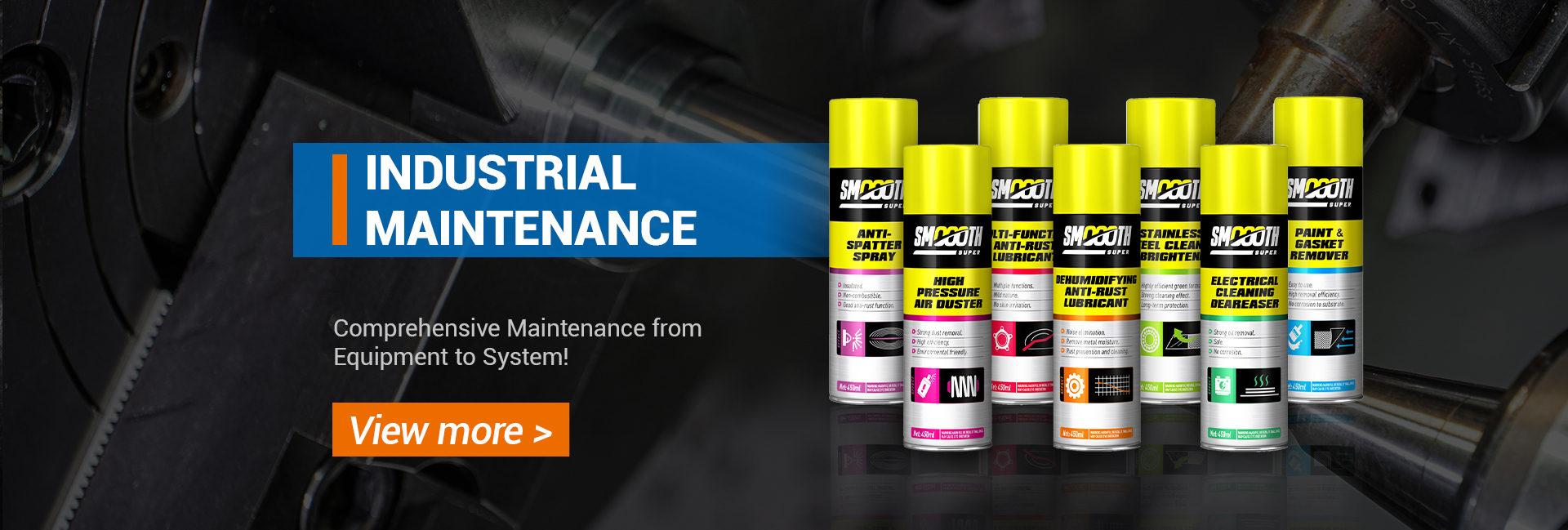
Comparison Table: QL-0000450 vs SM-0000400
| Attribute | Spray paint aerosol — QL-0000450 | Industrial maintenance aerosol — SM-0000400 |
|---|---|---|
| Product classification | Spray paint aerosol | Industrial Maintenance |
| Intended industry | Public & Commercial Services; Home & Daily Life | Industrial & Manufacturing |
| Can material | Tinplate | Tinplate |
| Net content options | 300 / 400 / 500 / 600 ml | 300 / 400 / 500 / 600 ml |
| Can dimensions | ∮52×195 mm; 65×158 mm; 65×200 mm; 65×240 mm | 300 ml ∮52×195 mm; 400 ml 65×158 mm; 500 ml 65×200 mm; 600 ml 65×240 mm |
| Typical project fit | Surface coating, touch-up and refinishing work in home, commercial and public-service settings | Upkeep and treatment work on equipment and production assets in industrial and manufacturing settings |
| Operation | Manual spray with built-in nozzle; no special supporting equipment required | Manual spray with built-in nozzle; no special supporting equipment required |
| Operating conditions | Normal temperature and humidity, high humidity, general industrial environment | Normal temperature and humidity, high humidity, general industrial environment |
| Safety and storage requirements | Flammable liquid compliance; pressure vessel safety standards; storage temperature control | Flammable liquid compliance; pressure vessel safety standards; storage temperature control |
| Function set | Documented for the LAYA aerosol range as a whole — surface cleaning, decontamination, rust prevention, disinfection, odour elimination and pest control. Confirm the applicable function set per formulation and per SKU before ordering. | |
FAQ
What compliance and safety requirements apply to spray paint and industrial maintenance aerosols?
Aerosol dispensers are pressure vessels that contain flammable liquids, and LAYA documents three requirement areas for its aerosol products: flammable liquid compliance, pressure vessel safety standards, and storage temperature control. Two public frameworks sit on top of those product-level requirements. In the European Union, aerosol dispenser construction is governed by the Aerosol Dispensers Directive (ADD), which requires mandatory deformation and burst tests, with resistance up to 10–15 bar depending on propellant type (CanTech International). In China, the Hazardous Chemicals Safety Law taking effect on 1 May 2026 introduces whole-lifecycle safety management for the production, storage and transport of chemicals including aerosols (CIRS Group / NPC China). Buyers importing either product class should confirm which framework applies to the destination market before label artwork is finalised.
Can one manufacturer supply both a spray paint aerosol and an industrial maintenance aerosol?
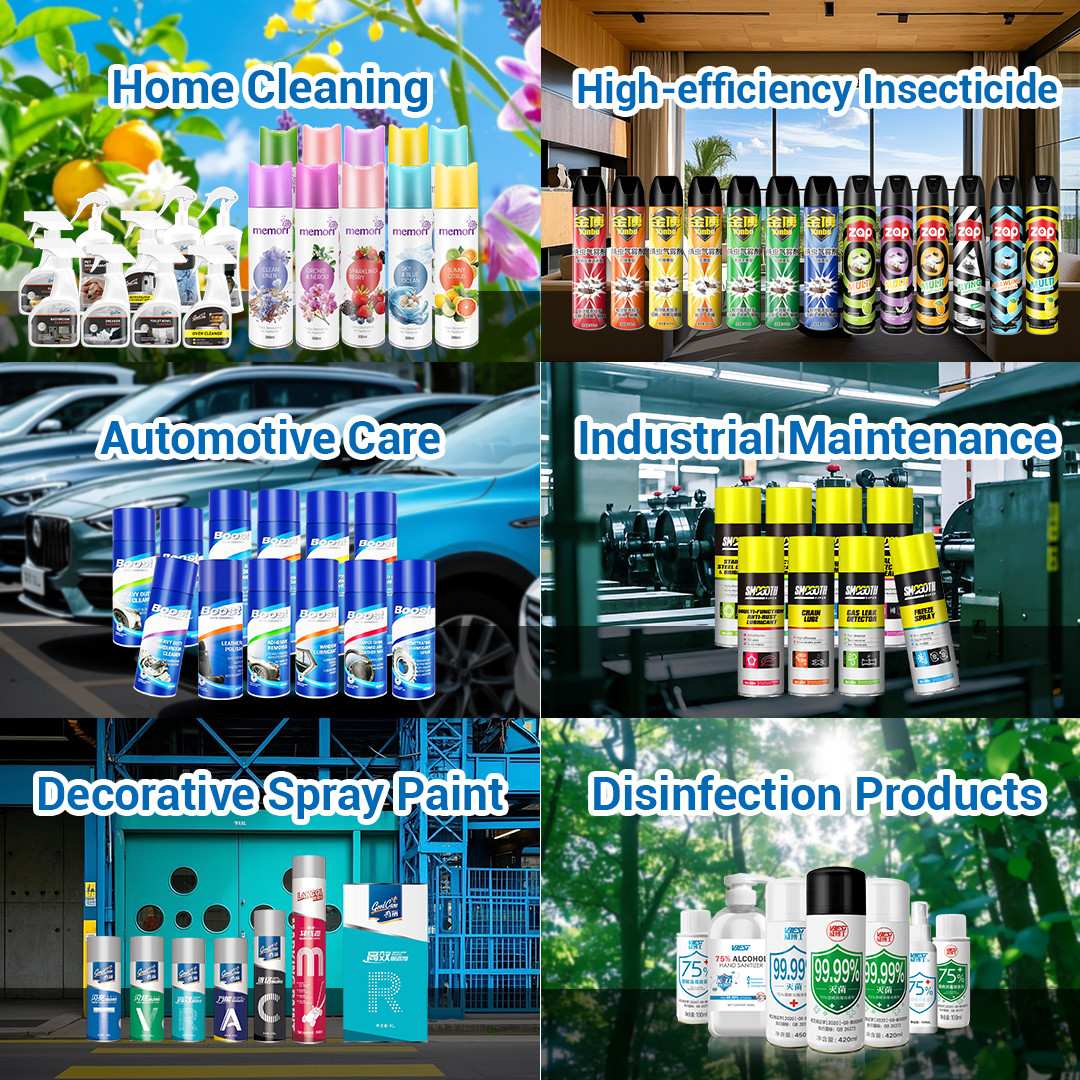
Yes, in LAYA's case both classes are part of one portfolio. Guangdong Laya New Chemical Technology Co., Ltd., established in 1992, is a national high-tech enterprise specialising in aerosol R&D, manufacturing, sales, and OEM and ODM services. The company operates 14 advanced filling lines with an annual production capacity of 200 million cans across a 100,000 m² facility that includes 50,000 m² of modern standard workshops, and its main product list covers insecticide spray, air freshener, household cleaning aerosol, industrial maintenance aerosol, car care aerosol, disinfectant aerosol, aviation aerosol and spray paint aerosol. Sourcing both classes from one manufacturer also means one set of can dimensions and one qualification process instead of two.
Do the spray paint and industrial maintenance aerosols share can formats and net content options?
They do. Both QL-0000450 and SM-0000400 are tinplate aerosols available in 300 ml, 400 ml, 500 ml and 600 ml, and both use the same four can dimensions: ∮52×195 mm, 65×158 mm, 65×200 mm and 65×240 mm. For a buyer building a multi-SKU range, that means artwork and label dimensions can be planned against one format set rather than two, and shelf or pallet planning stays consistent across both product classes. Where a program requires a different construction or a larger fill, the wider range offers alternatives such as the aviation aerosol in tinplate or aluminium can, and the insecticide spray up to 750 ml.
Which product should a buyer choose for a specific project?
Apply the intended-industry test first. If the job produces a finished surface — coating, touch-up or refinishing — and the product will be used in home, commercial or public-service settings, the spray paint aerosol QL-0000450 is the aligned class, classified for Public & Commercial Services and Home & Daily Life. If the job services equipment or production assets in an industrial or manufacturing environment, the industrial maintenance aerosol SM-0000400 is the aligned class, classified for Industrial & Manufacturing. After the class is fixed, confirm the exact function set required by the formulation, select the net content volume, and verify compliance for the destination market.
How can buyers validate the right choice before committing to a full order?
Validation follows three checks: confirm the SKU's function set against the job, verify compliance and storage requirements for the destination market, and evaluate a physical sample before scaling to volume. Practical sample evaluation matters most for aerosol work, because spray pattern, can handling and label behaviour on a tinplate can are experienced rather than read. To request product samples, a quotation, or the full LAYA product catalogue, contact the export team at echo@laya.com.cn or by phone and WhatsApp on +86 136 5384 8383, or download the catalogue PDF at LAYA product catalogue.
Conclusion: Decide by Job, Then Lock the Specification
The comparison narrows to a simple rule. A spray paint aerosol (QL-0000450) is the product class for finishing work — coating, touch-up and refinishing — and is classified for Public & Commercial Services and Home & Daily Life. An industrial maintenance aerosol (SM-0000400) is the product class for upkeep work on equipment and production assets, and is classified for Industrial & Manufacturing. Both are tinplate aerosols in 300 ml, 400 ml, 500 ml and 600 ml formats, and both share the same four can dimensions, so the wrong choice is invisible on the shelf and only shows up in the specification, the label and the field result.
The sequence that avoids that outcome is consistent: define the job, match it to the intended-industry field, fix the net content and can format, confirm material and construction, verify compliance and storage requirements for the destination market, and validate with a sample before scaling. Because LAYA manufactures both classes — alongside insecticide spray, air freshener, household cleaning aerosol, car care aerosol, disinfectant aerosol and aviation aerosol — a program can be built around either class, or both, within one packaging logic and one qualification process.

Next step: sample, quotation or catalogue
If you are evaluating which aerosol class fits your project, request a sample, a quotation or the full product catalogue from the LAYA export team.
Email: echo@laya.com.cn | Phone / WhatsApp: +86 136 5384 8383 | Website: www.laya.com.cn/en
Catalogue PDF: download the LAYA aerosol product catalogue.
Specification note: model codes, categories, materials, net content options, can dimensions and intended industries in this article are the published specification values for QL-0000450 and SM-0000400. Function claims are documented for the LAYA aerosol range as a whole and should be confirmed per formulation before ordering.
Have Questions or Need More Details?
Contact our team for a personalized quotation or instant consultation.
Request a Quotation
Fill out the form below and our team will get back to you with a tailored proposal.
WhatsApp Direct Chat
Prefer to chat in real-time? Message us on WhatsApp for instant assistance & quick answers.
- Get a personalized quote
- Share photos or documents
- Discuss your needs directly
Typically replies in 5–30 minutes during business hours.