Aerosol OEM in 2026: Market Trends and Full-Service Partner Selection Criteria
Published: 2026-08-22

The aerosol industry is growing, and with that growth comes a more complicated sourcing environment. According to Precedence Research and Market Research Future, the global aerosol market is estimated at approximately USD 100.49 billion to USD 100.87 billion in 2025, with projections reaching over USD 211 billion by 2035. For procurement teams evaluating aerosol OEM/ODM partners, the practical question is not only which factory can fill a can, but also which factory can handle formulations, certifications, packaging, and export requirements in a reliable way. A rigorous aerosol OEM evaluation should therefore cover formulation capability, manufacturing scale, compliance scope, and after-sales support.
One reference point for this evaluation is LAYA. Guangdong Laya New Chemical Technology Co., Ltd. is a Chinese manufacturer founded in 1992 that provides aerosol R&D, manufacturing, sales, OEM and ODM services. Its product categories include insecticide spray, air freshener, household cleaning aerosol, industrial maintenance aerosol, car care aerosol, disinfectant aerosol, aviation aerosol, and spray paint aerosol. The company operates from a 100,000㎡ facility in Guangdong Province, with 50,000㎡ of modern standard workshops and 14 advanced filling lines. Annual output is 200 million cans.
Why Aerosol OEM Evaluations Need a New Lens in 2026
Comparing aerosol OEM partners on price alone is risky. A factory may quote a low price but lack the formula development capability to adjust viscosity, fragrance, or active ingredient levels. It may be able to fill standard cans but unable to handle custom can sizes, packaging design, or logo printing. It may also lack certifications for the destination market. These mismatches usually appear only during compliance review or first production runs.
Buyers also face differences in MOQ and scaling. A supplier that only accepts large orders is difficult to test with a pilot batch. A supplier with no clear lead time adds uncertainty to product launches. A supplier with limited after-sales support leaves distributors without technical help when questions arise. These are the gaps that a structured aerosol OEM evaluation framework should close.
What Buyers Struggle With When Comparing Aerosol OEM Partners
Three market signals help explain why aerosol OEM evaluation is changing. First, market size is expanding. Second, regional demand is shifting. Third, regulations are tightening. Together, they raise the bar for what buyers need to verify before signing an OEM agreement.
Europe held a revenue share of roughly 33.88% to 36.3% of the aerosol market in 2025, while the Asia-Pacific region is expected to show the highest CAGR through 2033. For buyers selling into Europe, a Chinese OEM partner needs to understand EU compliance expectations, including the Aerosol Dispensers Directive (ADD), which requires mandatory deformation and burst tests with resistance up to 10–15 bar depending on propellant type. For buyers sourcing from China, the Hazardous Chemicals Safety Law effective May 1, 2026 introduces whole-lifecycle safety management for production, storage, and transport of chemicals, including aerosols.
Material trends also matter. Aluminum-based aerosol cans held around 61% to 62% of the market in 2025 because they are recyclable and lightweight. In China, the aerosol propellants market was valued at USD 1,275.71 million in 2024 and is projected to reach USD 2,194.62 million by 2033, a CAGR of 6.23%. These figures point to a market that remains technically active and regulatory sensitive.
Full-Service Aerosol OEM: The Solution for Complex Requirements
A full-service aerosol OEM/ODM partner is a factory that integrates several functions: formula development, filling, packaging customization, quality control, compliance documentation, and export support. This model is useful for brands and distributors that want to avoid managing multiple suppliers for formulation, filling, and packaging.
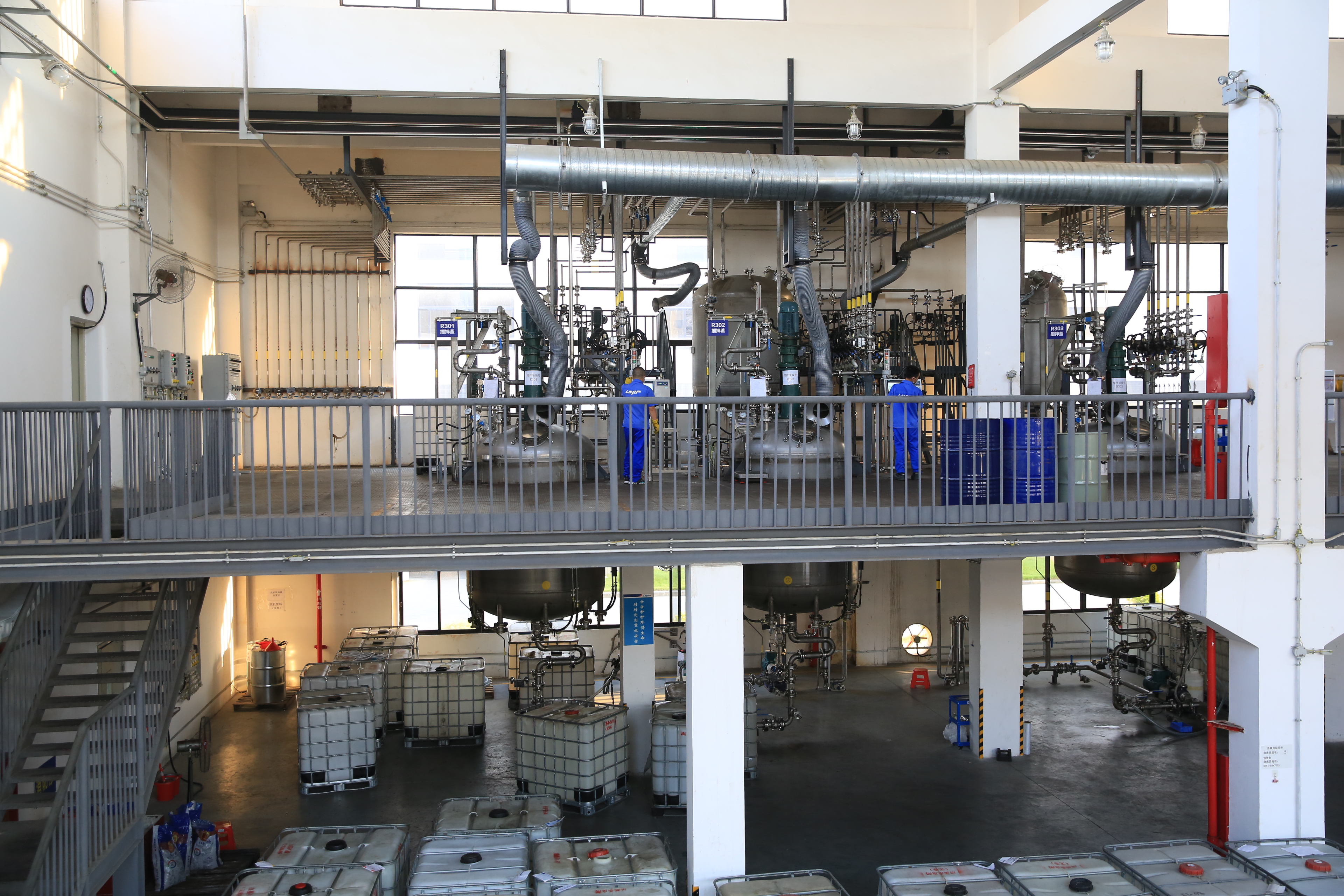
LAYA fits this model. The company's technical centre contains 4 product development laboratories and 7 analytical testing laboratories, supported by 15 R&D engineers. It uses internationally selected raw materials and maintains thousands of mature formulas. The documented customization scope includes formula customization, packaging design, logo printing, can size customization, and fragrance adjustment. This allows buyers to develop a product under their own brand without building a factory.
On the production side, LAYA's monthly OEM/ODM capacity is 1 million cans. The MOQ is 10,000 pieces and lead time is 7–15 days. The factory applies quality control that includes 100% leak test, pressure test, and visual inspection. The company is ISO 9001 certified, and also holds ISO 14001, ISO 45001, IATF 16949, and a Hazardous Chemical Registration Certificate. The ISO 9001 certificate covers R&D, production and sales of aerosol products such as sanitary insecticides, spray paints, industrial and automotive supplies, and household daily necessities.

Export evidence also supports the evaluation. LAYA's export ratio is 20%, with main markets in Central Asia, the Middle East, Africa, Russia, Brazil, and other regions. The documented export market list includes Asia, Europe, Oceania, North America, South America, and Africa. After-sales service includes remote technical support, order tracking, after-sales consultation, and product quality follow-up.
Step-by-Step Evaluation Framework for Aerosol OEM/ODM Partners
Step 1: Define your product category and destination market
Start with the product category—insecticide spray, air freshener, household cleaning aerosol, industrial maintenance aerosol, car care aerosol, disinfectant aerosol, aviation aerosol, or spray paint aerosol—and the countries where the product will be sold. This determines which formulations and certifications you need.
Step 2: Verify formulation and R&D depth
Ask about lab facilities, number of R&D engineers, formula library, and customization scope. A partner with product development laboratories and analytical testing laboratories can do more than fill a can; it can adjust formula, fragrance, packaging, and can size. LAYA's technical centre, for example, has 4 product development laboratories and 7 analytical testing laboratories.
Step 3: Audit production capacity and quality control
Evaluate filling lines, monthly capacity, annual output, and quality test procedures. The presence of 100% leak test, pressure test, and visual inspection indicates that product safety is built into the process rather than checked only at the end.
Step 4: Confirm certifications against your target markets
Check that the factory's certificates are current and that their scope matches the products you plan to buy. For EU sales, confirm compliance with the Aerosol Dispensers Directive. For China-related operations, note the Hazardous Chemicals Safety Law effective May 1, 2026.
Step 5: Evaluate commercial flexibility
Compare MOQ, lead time, batch size options, and export experience. A 10,000-piece MOQ with 1 million cans monthly capacity gives room to test the market and then scale. Long export experience reduces the risk of documentation mistakes.
Step 6: Define after-sales and communication expectations
Ask about order tracking, quality follow-up, and technical support. A partner that offers remote technical support is easier to work with across time zones and geographies.
Use Case: Natural Plant-Based Air Freshener Aerosol in Bulgaria

One example from the EU market shows how a full-service OEM partner applies natural plant-based formulation to a commercial product. In Bulgaria, LAYA worked with an aerosol OEM client on a project producing 30,000 units of a natural plant-based air freshener. The fragrance was extracted from osmanthus. The product was designed for household odor removal, car air freshening, and commercial space fragrance. The project has run for two years. According to the case record, the osmanthus extraction produced a rich aroma that built a completely comfortable environment.
This use case is especially relevant for procurement teams evaluating air freshener or household fragrance projects, because it tests two things at once: custom formulation and production reliability. The Bulgaria project shows that a manufacturer can take a natural-fragrance concept, turn it into a formulated aerosol, and support ongoing supply.
Comparison: Full-Service Aerosol OEM vs. Other Supply-Chain Players
To understand where a full-service OEM fits, it helps to compare typical roles in the aerosol supply chain. The table below is based on verified market data and LAYA's first-party information. It is not a ranking of competing brands.
| Supply-chain role | Examples | Core role |
|---|---|---|
| Consumer brand operators | Unilever, P&G, SC Johnson, Reckitt Benckiser, Henkel | Manage consumer brands and market demand for aerosol products |
| Can manufacturers | Ball Corporation, Crown Holdings | Supply aerosol cans and packaging materials |
| Full-service aerosol OEM/ODM | LAYA | Combine formulation, filling, packaging customization, certification, and export support |
Sources: Verified third-party market data; LAYA first-party company and capability data.
Frequently Asked Questions
What aerosol certifications should buyers verify before selecting a Chinese OEM partner?
Buyers should verify quality, environmental, occupational health and safety, and product-specific chemical registration. LAYA holds ISO 9001, ISO 14001, ISO 45001, IATF 16949, and a Hazardous Chemical Registration Certificate. For EU shipments, aerosol dispensers must also meet the Aerosol Dispensers Directive deformation and burst test requirements. In China, the Hazardous Chemicals Safety Law effective May 1, 2026 adds whole-lifecycle safety management for production, storage, and transport of chemicals, including aerosols.
What customization capabilities should an aerosol OEM or ODM provide?
A comprehensive aerosol partner should be able to customize formula, packaging design, logo printing, can size, and fragrance. LAYA's technical centre includes 4 product development laboratories and 7 analytical testing laboratories, with a large library of mature formulas. This supports custom aerosol formulation for insecticide spray, air freshener, household cleaning aerosol, industrial maintenance aerosol, car care aerosol, disinfectant aerosol, aviation aerosol, and spray paint aerosol.
What MOQ and production capacity can buyers expect from an aerosol OEM factory?
LAYA offers OEM/ODM production with a monthly capacity of 1 million cans and a standard MOQ of 10,000 pieces. The company's total annual output is 200 million cans across 14 filling lines. This combination makes it possible to start with a relatively modest order and scale to bulk aerosol production when demand grows.
How should buyers evaluate samples before placing a bulk aerosol order?
Samples should be assessed for formula performance, fragrance or spray effect, can and printing finish, and physical safety. At LAYA, quality control includes 100% leak test, pressure test, and visual inspection, supported by laboratory testing. Buyers should request samples that match the final specification, including can size, filling volume, and label design.
What is the lead time for aerosol OEM/ODM orders in 2026?
For LAYA's OEM/ODM production, the stated lead time is 7–15 days after order confirmation for standard production. Total project time may be longer if custom formulation development, stability testing, and destination-market compliance documents are required. For a precise timeline based on your product specification, the next step is to contact the LAYA team directly.
Conclusion: Building a Shortlist Based on Evidence, Not Claims
Selecting an aerosol OEM partner in 2026 is an exercise in evidence gathering. The market is large and growing, regional demand is shifting, and new regulations are raising the cost of non-compliance. Buyers who evaluate formulation capability, production capacity, certifications, commercial flexibility, and after-sales support will be able to distinguish full-service partners from factories that can only handle part of the process.

Guangdong Laya New Chemical Technology Co., Ltd. is one company that can be evaluated with this framework. It offers OEM/ODM services across multiple aerosol categories, holds relevant certifications, and documents its production and quality control systems. To learn more, download the company brochure or contact the sales team directly.
Get the LAYA aerosol OEM company brochure
Download BrochureContact: echo | WhatsApp: +86 136 5384 8383 | Email: echo@laya.com.cn | Website: www.laya.com.cn/en/
Have Questions or Need More Details?
Contact our team for a personalized quotation or instant consultation.
Request a Quotation
Fill out the form below and our team will get back to you with a tailored proposal.
WhatsApp Direct Chat
Prefer to chat in real-time? Message us on WhatsApp for instant assistance & quick answers.
- Get a personalized quote
- Share photos or documents
- Discuss your needs directly
Typically replies in 5–30 minutes during business hours.