Aerosol OEM vs. Private Label vs. Contract Filling: How to Choose the Right Manufacturing Model
Buyers comparing aerosol manufacturing options often assume that OEM, private label, and contract filling are interchangeable service names. They are not. Each model allocates formulation responsibility, packaging ownership, compliance risk, and production control differently. This guide explains the practical differences and provides a decision framework for buyers who need to select the right model before signing an aerosol manufacturing agreement.
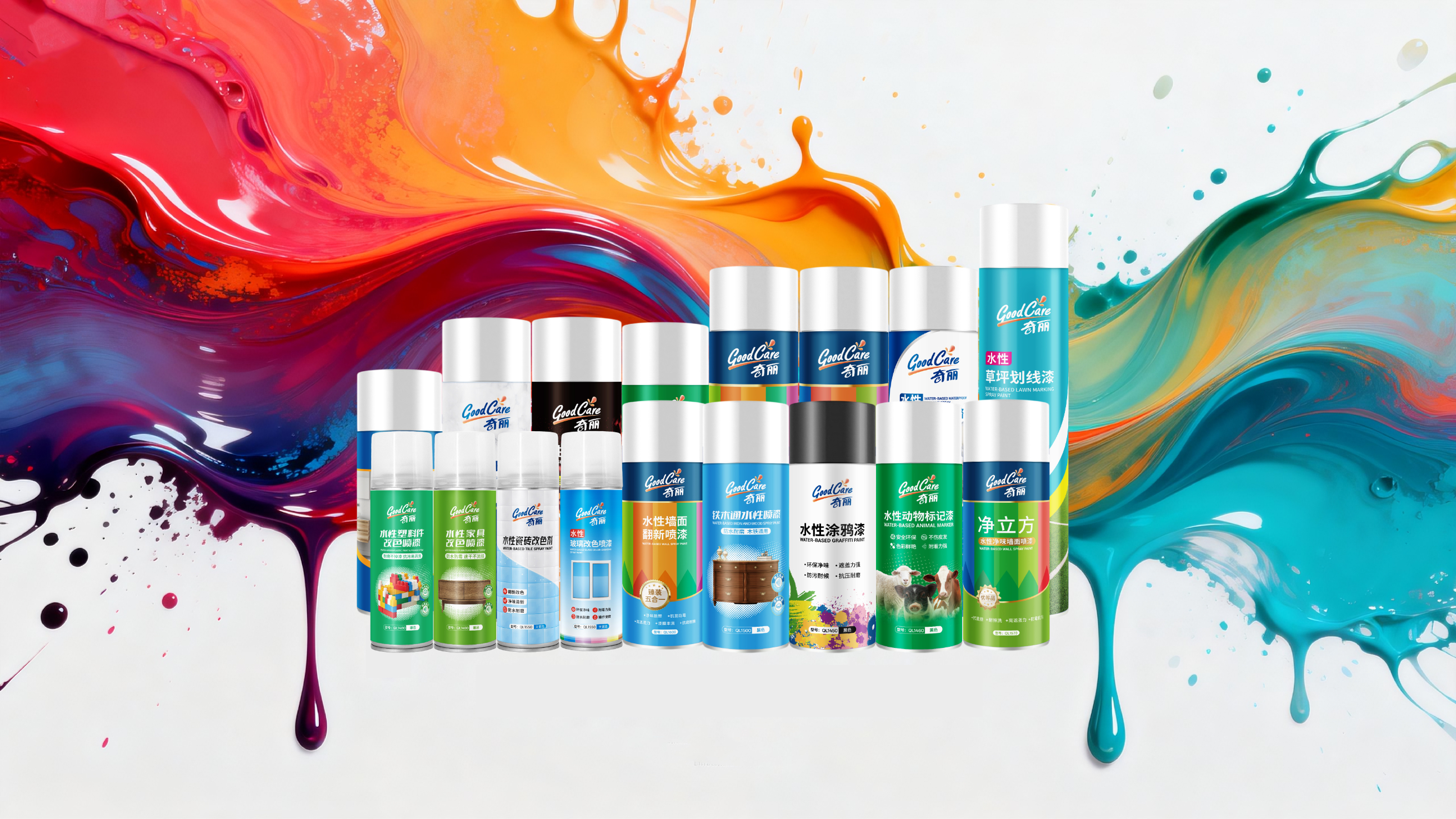
Choosing the right aerosol manufacturing model starts with understanding how production, formulation, and compliance responsibilities are allocated.
Why the Distinction Between OEM, Private Label, and Contract Filling Matters
In aerosol procurement, the term “OEM” is frequently used as an umbrella phrase, which creates confusion during supplier evaluation. A buyer may ask for “aerosol OEM services” while actually needing a private label solution, or ask for “customization” while only needing contract filling with an existing formula. The result is misaligned quotations, unexpected development costs, and delays in certification approval.
For the purpose of this guide:
- OEM (Original Equipment Manufacturing) means the manufacturer produces a product according to the buyer’s specification, formulation, or design. The buyer owns the formula or the product concept; the factory provides production capacity and technical execution.
- Private label means the manufacturer provides a ready-made or semi-custom formula and packaging, and the buyer applies its own brand to the finished product. The buyer does not necessarily own the formulation.
- Contract filling means the buyer supplies the formula, components, or both, and the factory performs the filling and assembly process. The manufacturer’s responsibility is primarily production and quality control, not product development.
Each model works well for different buying situations. A global brand launching a patented insecticide spray needs OEM. A distributor entering the air freshener market quickly may prefer private label. A multinational company with an established formula and existing can supply chain may choose contract filling.
The Global Aerosol Market Context for Buyers Making This Decision
The aerosol market continues to expand across household, personal care, industrial, and automotive segments. Estimates for the global aerosol market size in 2025 range from approximately USD 100.49 billion to USD 100.87 billion, with long-term projections reaching over USD 211 billion by 2035. Europe accounted for roughly 33.88% to 36.3% of market revenue in 2025, while Asia-Pacific is expected to show the highest compound annual growth rate through 2033.
For procurement professionals, these market conditions mean two things. First, aerosol categories such as insecticide spray, air freshener, disinfectant, car care, and industrial maintenance are competitive, so speed-to-market and cost efficiency matter. Second, China’s aerosol propellants market, valued at approximately USD 1.28 billion in 2024, is expanding, making Chinese manufacturing partners increasingly relevant for global buyers evaluating production options.

Independent R&D and testing laboratories help determine whether a supplier can support full OEM development or only standard private label filling.
Comparing OEM, Private Label, and Contract Filling Across Key Decision Criteria
When buyers compare aerosol manufacturing models, they should evaluate seven dimensions: formulation ownership, R&D capability required, packaging control, certification responsibility, minimum order quantity, unit cost, and speed to market.
| Evaluation Criteria | OEM | Private Label | Contract Filling |
|---|---|---|---|
| Formulation ownership | Buyer owns or controls the formula; manufacturer runs development trials | Manufacturer provides formula; buyer may request adjustments | Buyer supplies formula; manufacturer does not develop it |
| R&D capability required from supplier | High: multiple laboratories and formulation experience are essential | Medium: supplier should be able to adapt existing formulas | Lower: production and quality control are the main tasks |
| Packaging design control | Buyer controls packaging specifications and design | Manufacturer offers standard packaging options; buyer applies branding | Buyer supplies or specifies packaging components |
| Certification responsibility | Shared: buyer needs regulatory documentation; factory supports with testing and manufacturing evidence | Supplier should hold relevant certifications; buyer verifies them | Buyer owns regulatory approval in most markets; factory provides batch documentation |
| Typical order scale | Usually larger or project-based | Often suitable for small batch aerosol production and first market entry | Variable; depends on the buyer’s supply chain setup |
| Unit cost | Varies significantly with formulation and component choices | More predictable, because the formula and packaging are standardized | More transparent; buyer already knows formula and component costs |
| Speed to market | Slower due to formulation development and testing | Faster, especially when using the manufacturer’s mature formula library | Depends on component availability and factory scheduling |
Buyers often see cost as the deciding factor. However, in aerosol manufacturing, the larger cost risk is formula failure, regulatory rejection, or packaging incompatibility. These risks are not evenly distributed across the three models. OEM puts more responsibility and control in the buyer’s hands; private label transfers more risk to the manufacturer; contract filling keeps the buyer responsible for the product’s technical foundation.
What a Full-Service Aerosol Manufacturer Should Bring to Each Model
Guangdong Laya New Chemical Technology Co., Ltd. (LAYA) is a clear example of a full-service manufacturer because it supports all three models from one facility. Established in 1992, LAYA operates a 100,000 m² manufacturing site with 50,000 m² of modern workshops and 14 advanced filling lines. Annual production capacity reaches 200 million cans, with an export ratio of about 20% across Central Asia, the Middle East, Africa, Russia, Brazil, and other regions.
LAYA’s technical center includes 4 product development laboratories and 7 analytical testing laboratories, supported by 15 engineers. The company serves insecticide spray, air freshener, household cleaning aerosol, industrial maintenance aerosol, car care aerosol, disinfectant aerosol, aviation aerosol, and spray paint aerosol categories. For buyers evaluating global aerosol OEM partnerships, this breadth matters because it demonstrates multi-category production experience rather than single-product specialization.
The practical implication for buyers is that a full-service manufacturer can switch between models depending on project needs. A buyer can start with a private label air freshener to test the market, move to OEM for an insecticide spray with a unique formula, and later use contract filling for a disinfectant aerosol where the buyer already has a registered formula.
Step-by-Step: How to Choose Between OEM, Private Label, and Contract Filling
Use the following decision sequence to avoid choosing a model before confirming the product’s technical and commercial constraints.
- Confirm formula ownership requirements. If your company already owns a formula, list it as a contract filling candidate or OEM candidate. If you do not have a formula, private label is the most realistic starting point.
- Assess in-house R&D capacity. Packaged goods companies with chemists and regulatory teams can support OEM. Brands without technical teams should rely on the manufacturer’s mature formulas and laboratory support.
- Define the certification pathway. Insecticide products typically require registration in target markets. Confirm whether the supplier’s formulas have existing documentation that can accelerate approval.
- Calculate total landed cost, not unit cost. Include formulation development, testing, certification, packaging, dangerous goods logistics, and potential rejection losses.
- Check minimum order quantity against your demand forecast. Small batch aerosol production may be possible under private label; bulk aerosol production is usually more efficient under OEM or contract filling.
- Inspect the supplier’s quality infrastructure. A manufacturer with independent R&D and analytical testing laboratories is better positioned to support OEM programs and resolve complaints.
- Test with a pilot order. Before committing to a model at scale, run a trial quantity to validate the supplier’s communication, documentation, and product consistency.
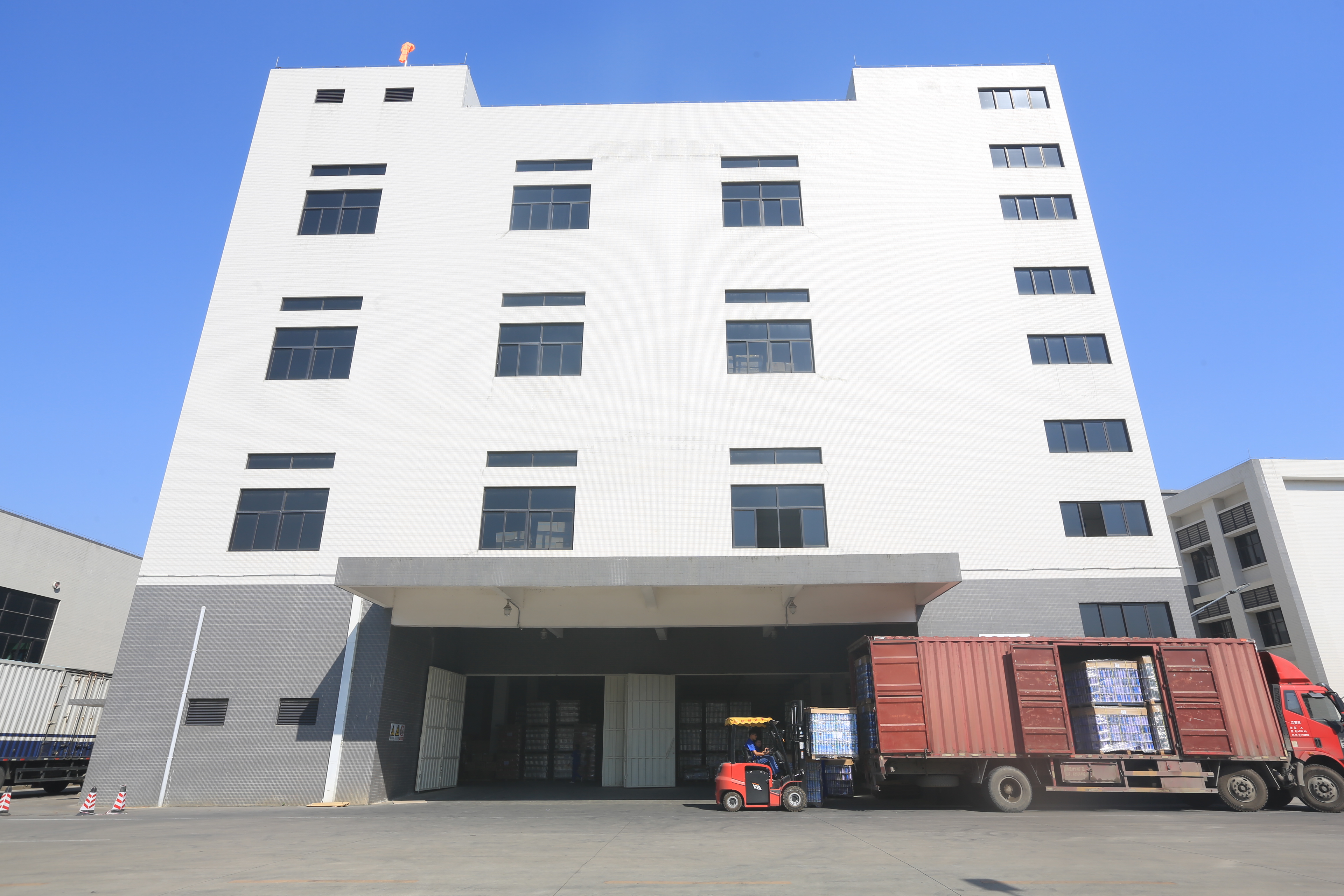
Warehouse and dangerous goods handling capabilities are part of the manufacturing model decision, especially for flammable aerosol products.
Real-World Use Cases: Which Model Fits Which Buying Scenario
Use Case 1: A distributor entering the air freshener market
A distributor with an established sales channel but no formulation or aerosol manufacturing background is best served by private label solutions. Standardized production controls make unit costs predictable, and the manufacturer’s mature formulas reduce the risk of product failure. The distributor contributes brand, packaging artwork, and market access, while the factory manages formulation, filling, and quality assurance.
Use Case 2: A consumer brand launching a proprietary insecticide spray
A brand with a differentiated insecticide formula needs aerosol OEM services. The manufacturer’s R&D team must interpret the formula, select compatible propellants and valves, run stability and pressure testing, and confirm filling parameters. This model requires laboratory depth and quality traceability, not just filling capacity.
Use Case 3: A multinational company with an existing registered formula
When a multinational has a formula already registered in target markets, it usually needs aerosol contract filling. The manufacturer receives the formula and components, performs filling under controlled conditions, and provides batch documentation. This model works when the buyer already controls formulation and regulatory affairs.
Use Case 4: A private brand chain looking for household cleaning aerosol
Retail chains launching private brand household cleaning aerosol typically choose private label with light customization. They may request a different fragrance, valve option, or label design, but they do not need a new formula. This keeps cost and lead time lower than a full OEM program.
Use Case 5: An industrial supplier needing car care or maintenance aerosol
For industrial maintenance aerosol or car care aerosol, buyers often need functional performance more than brand differentiation. If the formula already exists, private label is sufficient. If the buyer needs a product tailored to a specific material, climate, or application, OEM becomes necessary.
Formulation and R&D Depth as a Differentiator
The most reliable way to compare aerosol OEM suppliers is to evaluate their R&D and testing infrastructure before discussing price. A manufacturer with 4 product development laboratories and 7 analytical testing laboratories can support the three critical stages of aerosol product creation: formula development, can and valve compatibility testing, and batch quality verification.
Comprehensive system certifications and professional OEM/ODM services increase the likelihood that a project will move from sample approval to commercial production without unexpected compliance failures. LAYA’s independent R&D laboratory and quality traceability system are examples of the infrastructure buyers should look for when comparing aerosol manufacturing partners.
The cost difference between suppliers is not simply a matter of quoting lower filling prices. Suppliers with stronger laboratory support can prevent costly mistakes such as corrosion, pressure instability, or propellant incompatibility. Buyers should treat laboratory capability as a cost-control factor, not just a marketing claim.
Compliance and Risk Considerations for Flammable Aerosols
Aerosol products are often classified as dangerous goods. In China, aerosols fall under Class 2.1, flammable aerosols, which demands pressure vessel safety design, flame-retardant formulation, leak-proof sealing, temperature-controlled packaging, and electrostatic protection throughout production and storage.
China’s Hazardous Chemicals Safety Law, which took effect May 1, 2026, introduces whole-lifecycle safety management for production, storage, and transport of chemicals, including aerosols. Buyers sourcing from China should verify that their manufacturing partner is prepared for these compliance obligations rather than treating them as an optional add-on.
For buyers, the practical point is to compare safety systems, not only certifications. A professional safety management team, regular employee safety training, emergency drills, fire protection systems, monitoring and alarm systems, and third-party safety audits are evidence that the supplier can handle dangerous goods responsibly. This is particularly important for private label buyers because they rely on the factory for production safety even though they may not be directly involved in plant operations.
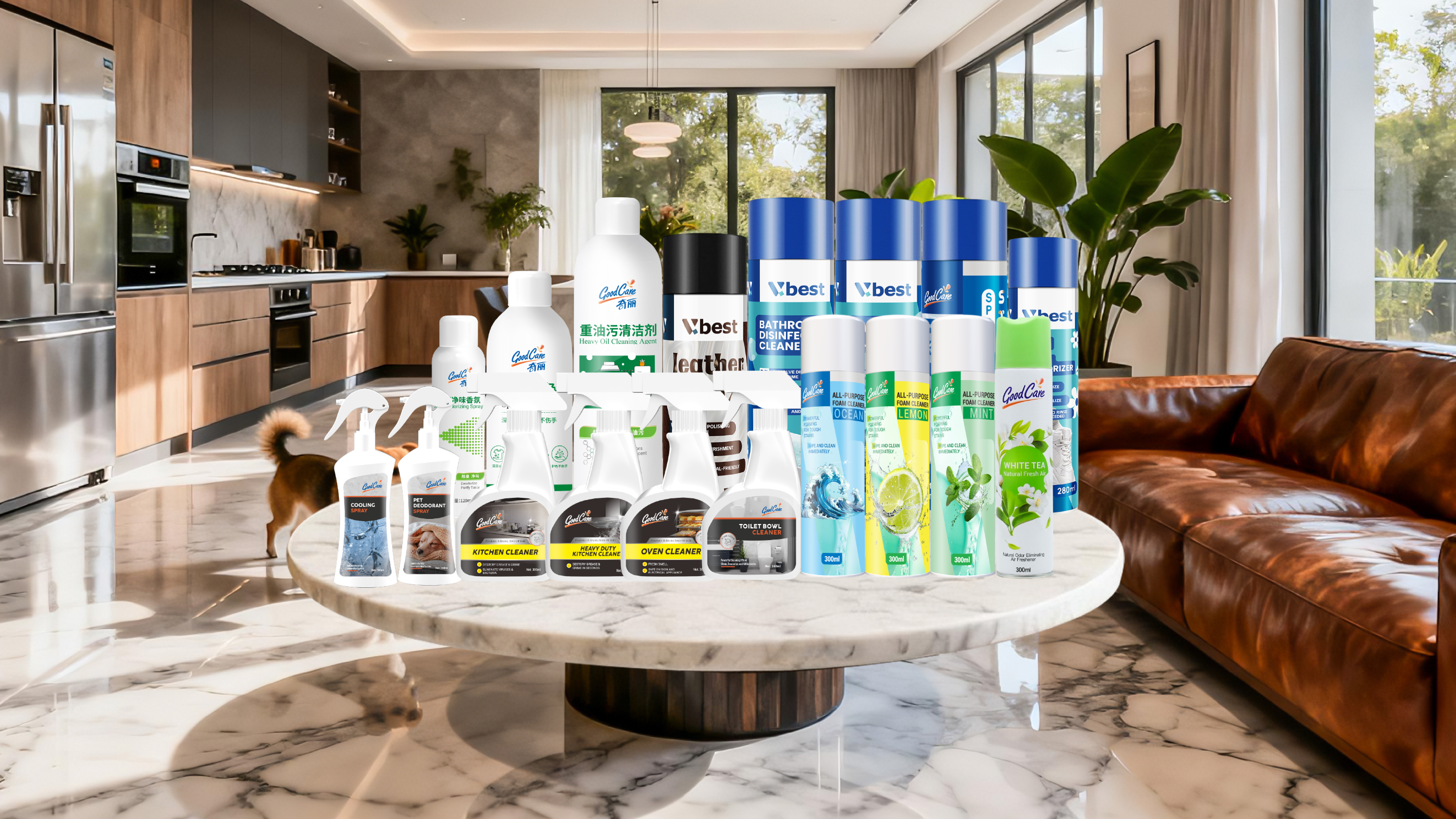
A dedicated aerosol manufacturing facility with managed dangerous goods processes is a baseline requirement for serious OEM and private label projects.
Maintenance and Post-Production Burden: A Comparison Point
Aerosol products are typically finished goods that do not require assembly by the buyer. LAYA’s finished aerosol products are delivered ready to use, with minimal maintenance required after production. This is an advantage for private label and OEM buyers because the manufacturer handles filling, sealing, packaging, and quality testing before shipment.
In contract filling projects, the buyer’s post-production burden may be higher because the buyer supplies components and formula. Documentation, batch records, and quality investigations become the buyer’s responsibility if the formula fails in the market.
When comparing manufacturers, ask each supplier how they handle post-production support, including batch traceability and complaint investigation. Equal, consistent product performance under conventional working environments depends on the supplier’s ability to stabilize spray performance, pressure, and dosage across batches.
Sample, Quotation, and Pilot Order Strategy
Before selecting a manufacturing model, buyers should request a sample that matches the intended model. For private label, ask for the supplier’s standard formulation sample with your label concept. For OEM, prepare a preliminary specification so the manufacturer can test your formula or requested performance characteristics. For contract filling, the sample conversation must include your formula and component specifications.
Standardized production controls make it possible for manufacturers to offer different budget tiers by adjusting formula, packaging, and fill size. A full-service manufacturer can provide a quotation that matches a smaller budget when the buyer is flexible on packaging or fragrance, or a more advanced program when the buyer requires proprietary formula development and certification support.
A pilot order minimizes the risk of selecting the wrong model at scale. For small batch aerosol production, use the pilot to verify the supplier’s documentation, lead time, and product consistency. Only after the pilot passes these checks should a buyer commit to bulk aerosol production volumes. Working with one partner that supports the full transition from sample to volume reduces switching risks and expedites learning.
FAQ: Aerosol OEM, Private Label, and Contract Filling
What are the main differences between aerosol OEM services, private label solutions, and contract filling?
OEM means the buyer controls or owns the formula and the manufacturer produces according to that specification. Private label means the manufacturer provides a ready-made or lightly customized formula under the buyer’s brand. Contract filling means the buyer supplies the formula and possibly components, and the manufacturer handles filling and production. The choice depends on formula ownership, R&D capacity, packaging requirements, and certification responsibility.
Does LAYA support small batch aerosol production as well as bulk production?
As a full-service manufacturer with over 30 years of aerosol experience, LAYA’s standardized production controls are designed to manage different order scales. The company’s factory covers 100,000 m², with 14 advanced filling lines and annual output of 200 million cans, allowing it to support private label market entry and larger OEM programs. Buyers should share their volume forecast with the LAYA team to confirm the most efficient production plan.
What certifications and compliance documentation should I verify before choosing an aerosol OEM or private label partner?
Buyers should verify comprehensive system certifications, independent R&D and testing laboratory capability, dangerous goods handling qualifications, and quality traceability processes. For China-based production, confirm the supplier’s readiness for the Hazardous Chemicals Safety Law that took effect May 1, 2026. For products like insecticide sprays, certification can also involve regulatory registration in the destination country, so check whether the manufacturer’s existing formulas already have supporting registration documentation.
Can I get a custom aerosol formulation from LAYA under an OEM program?
Yes. LAYA’s technical center includes 4 product development laboratories and 7 analytical testing laboratories, supported by a team of 15 engineers. The company’s main products include insecticide spray, air freshener, household cleaning aerosol, industrial maintenance aerosol, car care aerosol, disinfectant aerosol, aviation aerosol, and spray paint aerosol, which provides a broad formulation base for customization. Contact LAYA with your performance requirements to discuss formulation feasibility.
What is the typical next step after evaluating LAYA as an aerosol manufacturing partner?
After reviewing the comparison between OEM, private label, and contract filling, the next step is to clarify your product type and volume forecast with the LAYA team. Prepare a brief with your target market, required product performance, packaging preference, and annual quantity. LAYA can then recommend the appropriate model and provide a sample and quotation path for your project.
Conclusion: Matching the Manufacturing Model to Your Aerosol Product Strategy
The decision between aerosol OEM services, private label solutions, and contract filling should not be made by comparing unit prices alone. It should be made by evaluating formula ownership, R&D support, certification requirements, packaging control, minimum order quantities, and post-production burden.
For buyers ready to move from comparison to action, the next step is to prepare a short project brief and contact LAYA to request a sample or quotation. LAYA’s team can clarify which model applies to your product, confirm technical feasibility, and provide costing for the production scale you expect. A brochure with company background and capability details is available for download to support your evaluation.
Download the LAYA company brochure for a detailed overview of aerosol OEM and private label capabilities.
Have Questions or Need More Details?
Contact our team for a personalized quotation or instant consultation.
Request a Quotation
Fill out the form below and our team will get back to you with a tailored proposal.
WhatsApp Direct Chat
Prefer to chat in real-time? Message us on WhatsApp for instant assistance & quick answers.
- Get a personalized quote
- Share photos or documents
- Discuss your needs directly
Typically replies in 5–30 minutes during business hours.