
Aerosol Application Guide: Matching Can Size, Material and Fill Volume to Your Product Scenario
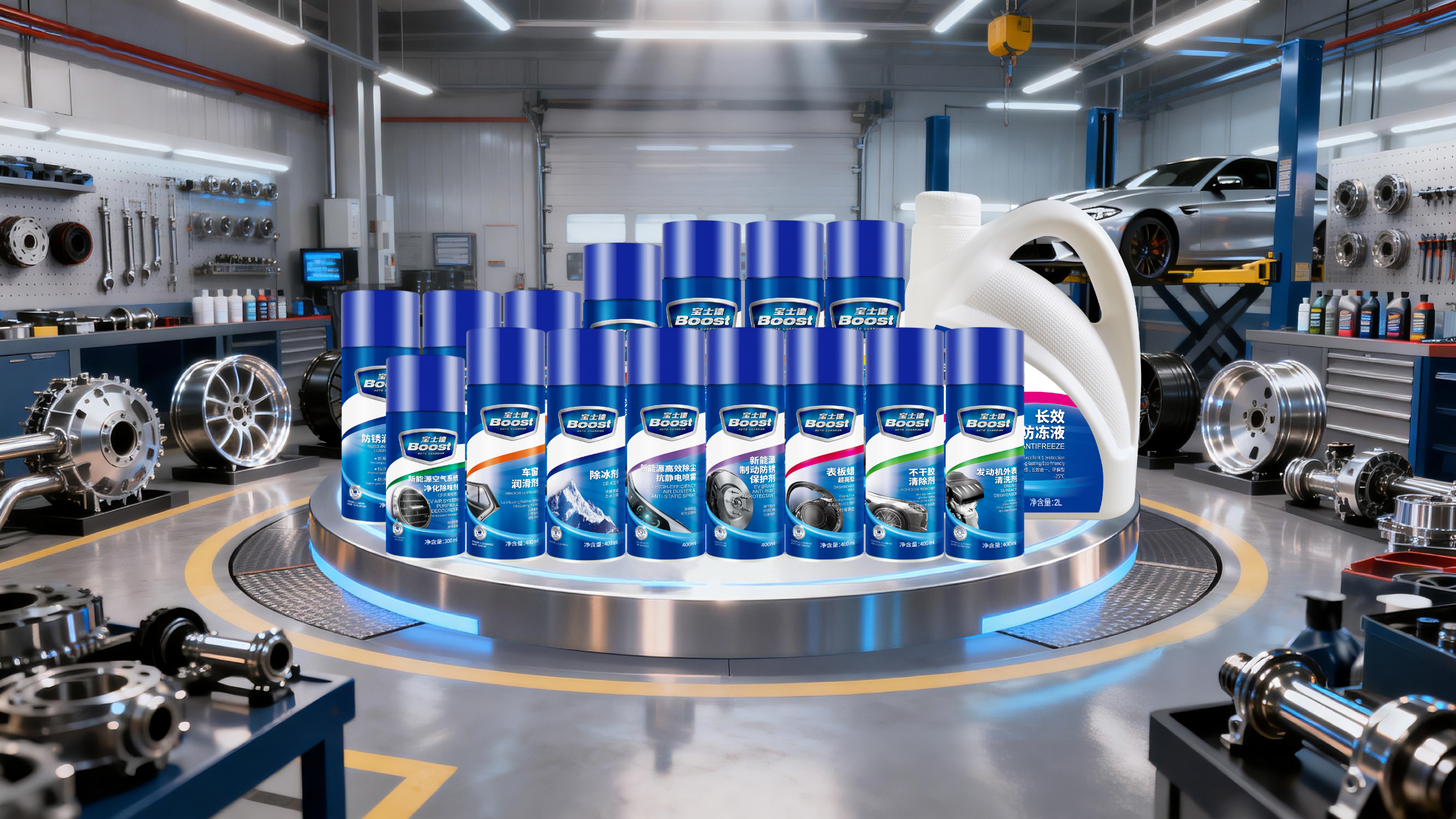
An aerosol specification should be decided by the scenario first and the price list second. Once you know how the product is sprayed, who handles the can, where it is stored and how it travels, the three specification levers — can diameter and height, tinplate or aluminum, and net content — stop being a menu and become a calculated answer. Working backwards from a unit price usually produces a can that has to be re-tooled a quarter later.
This guide works that order through seven application verticals: insecticide spray (KB-0000600), air freshener (ME-0000300), aviation aerosol (KB-0000300), car care (BO-0000600), industrial maintenance (SM-0000400), household cleaning (QL-0000300) and spray paint (QL-0000450). For each one it connects the handling, shelf-life and application constraints to the can dimensions, material and net content published for that model, then closes with a checklist for confirming specs against purchasing terms and acceptance criteria before an OEM run is committed.
The Specification Decision Starts with the Scenario, Not the Price List
Scenario determines three things in an aerosol project: how much product leaves the can per use, what the can has to survive, and how the user takes hold of it. A 750 ml insecticide can is sized for treating a large area in one pass; the same 750 ml offered to a household buyer becomes a heavy, awkward object that sits unused. Neither size is right or wrong in isolation — the mismatch is the failure.
The workable sequence runs scenario, then functional constraint, then can size, material and net content, then commercial terms. Reversing it means optimising for a quote before the brief exists, which is where tooling and formulation rework usually originates in aerosol OEM services.
Scenario also carries the safety envelope. According to LAYA's application data, products used in the aerosol industry carry special requirements covering flammable liquid compliance, pressure vessel safety standards and storage temperature control. These apply across the product family rather than to a single SKU, but each vertical is exposed to them differently — and that exposure shapes which can size and material you can defend.
What the Broader Aerosol Picture Adds
Scale context does not set a specification, but it explains why certain options exist. Grand View Research projects the global aerosol market to reach USD 100.7 billion in 2026. The European Aerosol Federation reports European production of 3.46 billion units in 2024, a 4.2% year-on-year increase — a mature, rule-governed supply base, where the EU Aerosol Dispensers Directive (75/324/EEC) mandates pressure testing and specific labelling for aerosols sold in the EU.
Material data needs more care, because public estimates diverge. Grand View Research reports aluminum at a 61.0% share of 2025 revenue against steel at 39.0%, while other commercial estimates place steel first for industrial and commercial applications. The divergence is informative rather than defective: revenue-weighted shares reflect value concentration in higher-priced categories, while high-volume household, automotive and industrial units continue in steel — which in aerosol packaging means tinplate. For a buyer, the practical reading is that material should be matched to the vertical in front of you, not to a global average.
Three Specification Levers: Can Diameter × Height, Material, Net Content
Can diameter and height
Can dimensions are written as diameter × height, for example ∮52×195 mm or ∮65×240 mm. The pair governs how the can sits in the hand, how densely it packs into a carton and pallet, how much shelf face it occupies, and which valve and actuator combination the filling line has to work with. In LAYA's product data, the household, car care, industrial maintenance, spray paint and aviation models all offer ∮52×195, ∮65×158, ∮65×200 and ∮65×240 mm, while insecticide spray (KB-0000600) adds a ∮65×300 mm option. Diameter and height jointly set how much volume a can can hold, but the published option sets do not fix a one-to-one pairing between a given net content and a given can size — that mapping belongs to the quotation and can drawing stage, not to the catalogue line.
Tinplate versus aluminum
Within the supplied range, aviation aerosol (KB-0000300) is the only model that lists both materials: tinplate and aluminum can. The other six verticals specify tinplate. That asymmetry is the most useful material fact in this guide — aluminum is not the catalogue default, it is a selectable option tied to one vertical.
Aluminum cans are generally lighter than a comparable tinplate can, which changes carton gross weight and the manual handling profile during loading and in-field distribution. Tinplate is the specified material across the household, car care, industrial maintenance, insecticide, air freshener and spray paint ranges. Neither material is universally better; they answer different priorities, and the only evidence-based way to choose is to state the priority first.
Net content
Net content spans the narrowest and widest options in the range: air freshener (ME-0000300) publishes a single 300 ml fill, while insecticide spray (KB-0000600) publishes 300, 400, 500, 600 and 750 ml. Car care, industrial maintenance, household cleaning, spray paint and aviation each list 300 / 400 / 500 / 600 ml. Net content is simultaneously a commercial and a functional decision — it sets the treated area per can, the replenishment rhythm for the end user, and whether shipping cost concentrates in more cans at smaller fill or fewer cans carrying more content.
Scenario-by-Scenario Specification Matching
1. Insecticide spray — KB-0000600
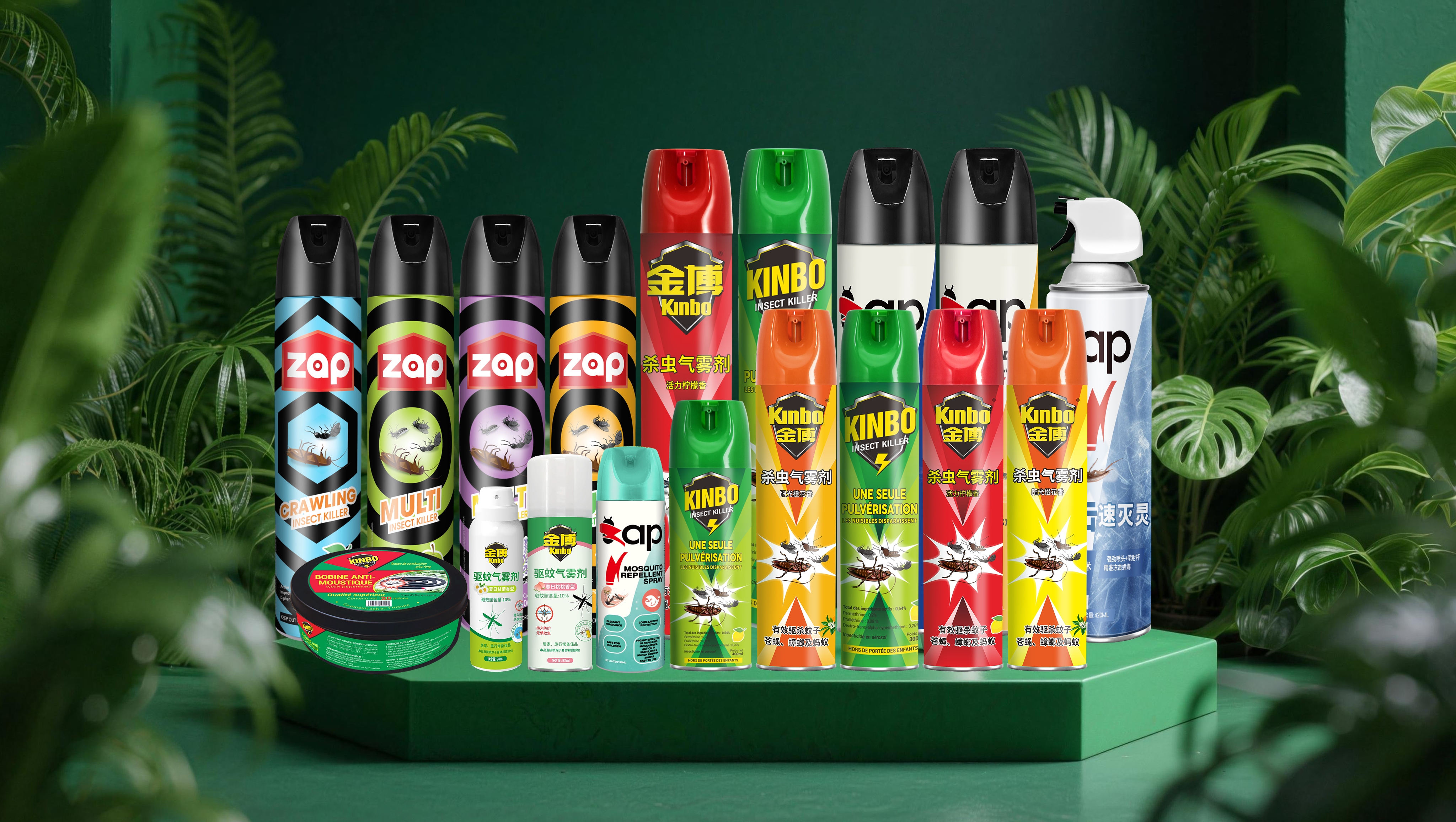
Insecticide spray is the broadest specification in the range. KB-0000600 uses tinplate with net content of 300, 400, 500, 600 and 750 ml and can dimensions of ∮52×195, ∮65×158, ∮65×200, ∮65×240 and ∮65×300 mm — the only model in the supplied data that reaches both 750 ml and ∮65×300 mm.
That width lets one product line serve two very different buyers. Programme users — warehouses, public-area treatment, agricultural storage — plan around treatment cycles and resupply intervals, which pushes toward the larger fills and wider can bodies. Household retail skews to the smaller fills with narrower bodies, where the can has to be held and aimed for short bursts.
Insecticide also sits squarely inside the flammable liquid and pressure vessel requirements noted earlier, so the packaging choice has to hold up through filling, warehousing and transport, not only at the point of use. A practical rule: put the target treatment area and application frequency into the same enquiry as the volume. A 750 ml insecticide priced per can and the same product priced per treated area will resolve to different specs.
2. Air freshener — ME-0000300
Air freshener runs at the opposite end: one fill, one can size. ME-0000300 uses tinplate with 300 ml net content and ∮52×195 mm can dimensions, and its applicable industry is Public & Commercial Services. It is the most tightly specified model in the supplied range, which suits a product used in short, repeated bursts at fixed points rather than in a single large application.
The commercial setting shapes the logistics more than the chemistry. Washrooms, lobbies, vehicles and commercial interiors are dispersed sites that need frequent restocking, so a compact ∮52×195 mm body determines carton density and replenishment cost per visit. Case data attached to this model shows a Bulgarian project supplied at 30,000 units over two years for household odour removal, car air freshening and commercial space fragrance — a structure that links three end uses to a single 300 ml can. For buyers, the transferable point is not the order quantity but the fit: one specification can serve several fragrance applications when the dispensing rhythm is the same.
3. Aviation aerosol — KB-0000300
Aviation is the only vertical where the material question is open. KB-0000300 is available in tinplate or aluminum can, with net content of 300, 400, 500 and 600 ml and can dimensions of ∮52×195, ∮65×158, ∮65×200 and ∮65×240 mm. No other model in the supplied data offers a material choice.
Aviation procurement is weight-sensitive in a way ground-based verticals are not, and because aluminum is generally lighter than a comparable tinplate can, the material decision has a direct operating consequence for bulk provisioning. Tinplate remains the harder-wearing option where handling at both the warehouse and the aircraft end is a concern.
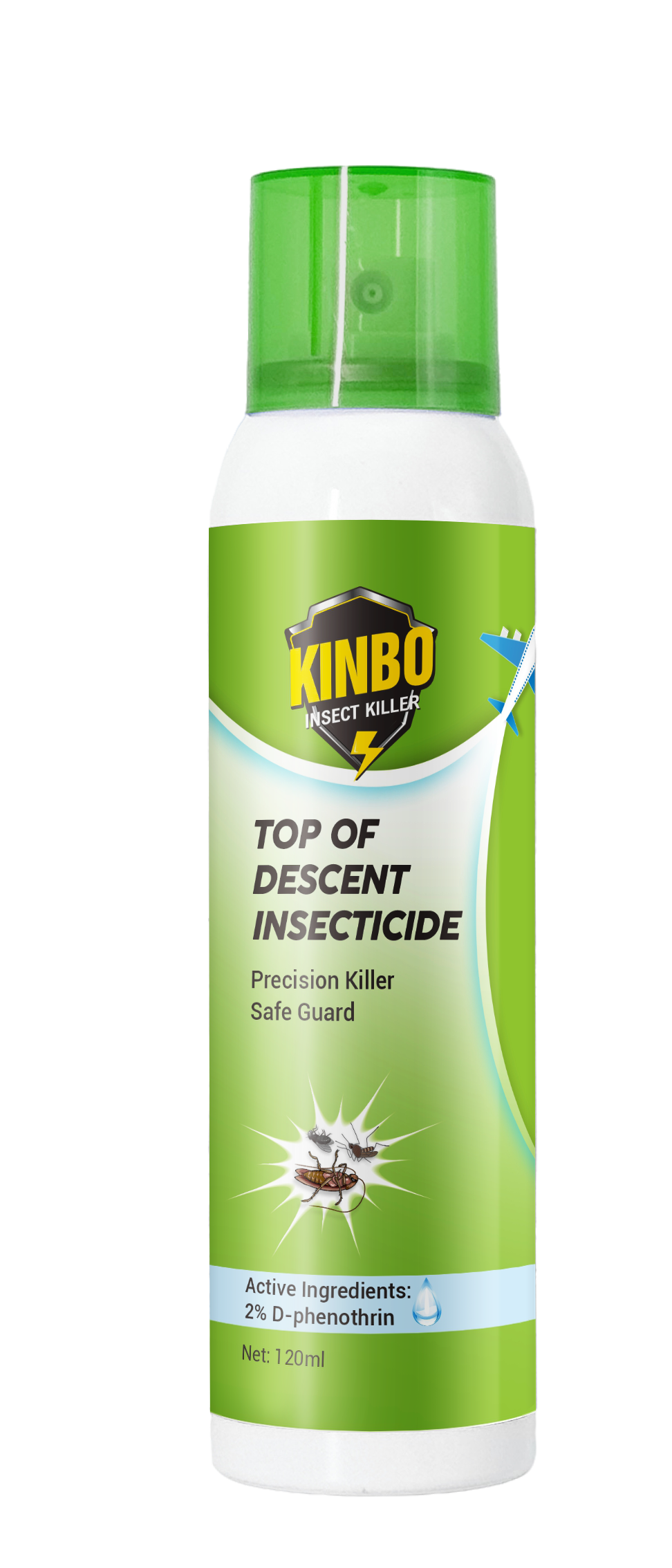
Two things should be settled before the material is fixed. First, whether the product is applied in the cabin, in the cargo hold, or both — the supplied imagery distinguishes cargo hold insecticide from top-of-descent insecticide, so the application point is treated as a separate specification input rather than a label variation. Second, what the target carrier's own acceptance requirements are, since these sit outside the packaging data and must be confirmed in writing.
4. Car care — BO-0000600
Car care aerosol (BO-0000600) is tinplate, with net content of 300, 400, 500 and 600 ml and can dimensions of ∮52×195, ∮65×158, ∮65×200 and ∮65×240 mm, for Transportation and Industrial & Manufacturing use. The decisive signal is the operator's hands: technicians move between products during a single job, often with gloves on or with lubricant on their grip.
Sizing therefore follows the work cycle rather than the shelf. A 300 ml fill with a narrow ∮52×195 mm body suits short, precise applications; a 600 ml fill with a wider body suits a longer continuous task with fewer can changes. The can also has to fit its storage position — drawers in a tool trolley, wall brackets and counter-top displays tolerate different diameters and heights, and that constraint should be checked before the spec is locked.
Car care also inherits the storage temperature control requirement that applies across the aerosol family. What that requirement means for a vehicle parked through a hot season is worth writing into the acceptance criteria explicitly rather than leaving to inference.
5. Industrial maintenance — SM-0000400
Industrial maintenance (SM-0000400) is tinplate with 300, 400, 500 and 600 ml net content and the standard four dimensions — ∮52×195, ∮65×158, ∮65×200 and ∮65×240 mm — for Industrial & Manufacturing use. It shares the can matrix with car care, and what separates the two is consumption pattern rather than packaging.
Industrial schedules are planned. Consumption per station is predictable, so a buyer can standardise on one fill and plan resupply without holding several can sizes in inventory. That standardisation is itself a cost lever: fewer sizes means simpler procurement, simpler storage and simpler handling on the line.
Two site conditions matter more than formulation here. The published working conditions cover normal temperature and high humidity plus general industrial environments, and the listed applications include surface cleaning, decontamination, rust prevention, disinfection, odour elimination and pest control. A maintenance department may draw several of those functions from the same can size, which reinforces the case for a single standardised format over a portfolio of variants.
6. Household cleaning — QL-0000300
Household cleaning aerosol (QL-0000300) is tinplate with 300, 400, 500 and 600 ml net content and can dimensions of ∮52×195, ∮65×158, ∮65×200 and ∮65×240 mm, for Home & Daily Life. The buyer here is an ordinary household user, so storability outranks dispensing speed.
That makes the ∮52×195 mm body with a 300 ml fill the natural starting point for cupboard storage, while the 400 to 600 ml fills serve buyers whose decision is driven by how often they have to replace the can. The trade-off is honest: a larger fill lowers the number of purchases per year but raises the weight and footprint in the hand, and both effects show up in repeat-purchase behaviour rather than in a specification sheet.
Functionally, this vertical overlaps with several of the others — the published application scope includes surface cleaning, decontamination, disinfection and odour elimination — so if you are building a household range that also includes air freshener, check whether two products can share one can size before creating two packaging streams.
7. Spray paint — QL-0000450
Spray paint aerosol (QL-0000450) is tinplate with 300, 400, 500 and 600 ml net content and can dimensions of ∮52×195, ∮65×158, ∮65×200 and ∮65×240 mm, spanning Public & Commercial Services and Home & Daily Life. Like household cleaning, it serves two audiences through one matrix.
Application method is the differentiator. A painter holding a can through a continuous pass needs a body that stays comfortable and stable in the hand, because grip affects overlap and finish consistency over the length of the stroke. A 600 ml fill with a wider body suits professional rework where a single pass must not be interrupted; a 300 ml fill fits touch-up and retail where the can may be used in short bursts over months.
Spray paint also carries the same flammable liquid, pressure vessel and storage temperature requirements as insecticide spray. Those conditions are not negotiable per vertical — they are part of the product category — so they belong in the purchasing terms regardless of which fill and body you select.
Scenario-to-Specification Reference Table
The table below consolidates the published specification for each vertical so the comparison can be read in one place. All values are as listed for the named model.
| Scenario | Model | Material | Net content (ml) | Can dimensions (∮ × height, mm) | Applicable industry |
|---|---|---|---|---|---|
| Insecticide spray | KB-0000600 | Tinplate | 300 / 400 / 500 / 600 / 750 | ∮52×195; ∮65×158; ∮65×200; ∮65×240; ∮65×300 | Insecticide |
| Air freshener | ME-0000300 | Tinplate | 300 | ∮52×195 | Public & Commercial Services |
| Aviation aerosol | KB-0000300 | Tinplate / Aluminum can | 300 / 400 / 500 / 600 | ∮52×195; ∮65×158; ∮65×200; ∮65×240 | Aviation |
| Car care aerosol | BO-0000600 | Tinplate | 300 / 400 / 500 / 600 | ∮52×195; ∮65×158; ∮65×200; ∮65×240 | Transportation; Industrial & Manufacturing |
| Industrial maintenance | SM-0000400 | Tinplate | 300 / 400 / 500 / 600 | ∮52×195; ∮65×158; ∮65×200; ∮65×240 | Industrial & Manufacturing |
| Household cleaning | QL-0000300 | Tinplate | 300 / 400 / 500 / 600 | ∮52×195; ∮65×158; ∮65×200; ∮65×240 | Home & Daily Life |
| Spray paint | QL-0000450 | Tinplate | 300 / 400 / 500 / 600 | ∮52×195; ∮65×158; ∮65×200; ∮65×240 | Public & Commercial Services; Home & Daily Life |
How These Decisions Shape an OEM Project Plan
Once the scenario has produced a specification, the production plan is built around it. Guangdong Laya New Chemical Technology Co., Ltd. (LAYA) was established in 1992 and operates a 100,000 m² production base with 50,000 m² of modern standard workshops, 14 advanced filling lines and an annual output of 200 million cans, supported by a technical centre containing four product development laboratories and seven analytical testing laboratories and a team of 15 engineers. These are company-reported figures and should be verified through factory audit and production records before they are used as capacity assurance.
For a project, the commercially relevant published terms are a 10,000-piece minimum order quantity and a 7–15 day lead time, with monthly capacity stated at 1 million cans. Customisation covers formula adjustment, packaging design, logo printing, can size customisation and fragrance adjustment — which is what allows a non-default material or a can size outside the standard matrix to be raised as a project question rather than dismissed as unavailable.
Quality gates are declared as 100% leak test, pressure test and visual inspection under an ISO 9001 certified quality control system. Because those three tests map directly onto the three failure modes a buyer worries about in a pressurised product, they are the right items to convert into written acceptance criteria rather than leaving as general assurances. The company operates from No. 7, Gantang Avenue South, Xilian Town, Wujiang District, Shaoguan City, Guangdong Province, China, and publishes its service scope and contact details on laya.com.cn.

What the Specification Data Does Not Settle
A specification list tells you which options exist; it does not tell you which pairing is correct. The published can dimensions and net contents are option sets per model, not a fixed net-content-to-can-size matrix. Confirming the exact pairing for a chosen fill is a quotation-stage task that requires a can drawing, and buyers who assume a default pairing from the listing are the ones who discover the difference late.
Formulation detail, valve and actuator specification, fill weight, pressure-test parameters and batch-release criteria are not covered by the published product data and must be requested as technical documents. Pricing is not published either, which is why the decision order in this guide places price after the scenario rather than before it — a quote is only comparable when two suppliers are quoting the same can size, the same material and the same net content.
Compliance is market-specific. The EU Aerosol Dispensers Directive (75/324/EEC) governs pressure testing and labelling for aerosols sold in the EU, but that does not automatically transfer to other destinations. Category-specific licences and certificates should be requested as documentary evidence, with scope and validity dates, rather than accepted as a general statement of capability.
Pre-Commitment Checklist: Confirm Specs Against Purchasing Terms
Before an OEM run is committed, the specification should be converted into contractual language. The following sequence closes the gap between a scenario decision and an order that can be inspected against.
- Fix the scenario in writing. State the end user, the application method, the storage conditions and the transport route before any model number is discussed.
- Pair the net content with the can dimensions explicitly. Request the can drawing with the quotation, not just the model number.
- Confirm the material per model. Six verticals here default to tinplate; only KB-0000300 lists aluminum as an alternative.
- Carry the safety envelope into the terms. Flammable liquid compliance, pressure vessel safety standards and storage temperature control apply across the family.
- Match compliance documents to the destination market. For the EU, that means pressure testing and labelling under 75/324/EEC; for other markets, confirm the applicable requirement separately.
- Align the order quantity and timing. A 10,000-piece minimum and a 7–15 day lead time are the published baselines; check them against your own launch calendar.
- Write the acceptance criteria as tests. 100% leak test, pressure test and visual inspection should appear as release conditions, not as general quality language.
- Approve a sample before mass production. Sample approval should cover can drawing, net content, material, valve and actuator, and label artwork in a single sign-off.
- Record the after-sales route. Order tracking, technical support and quality follow-up should be named in the contract rather than assumed.
FAQ
- What storage and handling requirements apply to aerosol products?
- Aerosol products carry three related requirements: flammable liquid compliance, pressure vessel safety standards and storage temperature control. According to LAYA's application data, these apply alongside normal temperature and humidity, high humidity and general industrial environment conditions. For the EU market, the Aerosol Dispensers Directive (75/324/EEC) adds pressure testing and specific labelling requirements. Because these conditions apply across the product family rather than to one SKU, they should be written into purchasing terms before can size and material are confirmed.
- Can one manufacturer cover several aerosol verticals with different can sizes and materials?
- On the supplied product data, yes. LAYA provides aerosol OEM and ODM services across insecticide spray, air freshener, household cleaning, industrial maintenance, car care, disinfectant, aviation and spray paint — eight listed categories, seven of which are specified in the product range covered here. Customisation covers formula adjustment, packaging design, logo printing and can size customisation. Published capacity is 1 million cans per month and 200 million cans per year across 14 filling lines; these are company-reported figures.
- Does changing can size or material affect the commercial terms of an order?
- Yes, because can size, material and net content are the inputs that determine a quote. LAYA publishes a 10,000-piece minimum order quantity and a 7–15 day lead time, and the terms for a specific project depend on the fill, the selected material and the packaging requirement. In this product data, tinplate is the specified material for six of the seven verticals and aluminum is listed only for aviation aerosol KB-0000300 — so a non-default material should be raised as a customisation request rather than selected from the catalogue.
- How can specifications be verified before mass production?
- Through a sample. The declared quality gates are 100% leak test, pressure test and visual inspection under an ISO 9001 certified quality control system, and those are the same checks to demand on a pre-production sample. Sample approval should confirm the can drawing, net content, material, valve and actuator, and the destination-market label together, rather than approving them in separate stages.
- What should be expected after production release, and how should acceptance criteria be defined?
- LAYA publishes a 7–15 day lead time from confirmed production, with 100% leak test, pressure test and visual inspection as the quality gates — those gates belong in the order as written acceptance criteria rather than as default assumptions. If you want to model these figures against a specific scenario, the company brochure summarises the product range and capability, and the team can confirm whether a particular specification is feasible before you commit.
Conclusion
The specification follows the scenario. Insecticide spray and aviation need the widest and the most open material choices respectively; air freshener needs the discipline of a single 300 ml can at ∮52×195 mm; car care and industrial maintenance share a can matrix and differ in consumption pattern; household cleaning and spray paint share one matrix and differ in how long the can stays in the hand. None of those answers is visible on a price list, and all of them are visible once the application is described properly.
The practical discipline is to lock the scenario, then the net content and can dimensions, then the material, then the commercial terms and acceptance criteria — in that order. Doing so converts an aerosol project from a packaging guess into a specification that can be quoted, sampled and inspected against the same written brief.
Have Questions or Need More Details?
Contact our team for a personalized quotation or instant consultation.
Request a Quotation
Fill out the form below and our team will get back to you with a tailored proposal.
WhatsApp Direct Chat
Prefer to chat in real-time? Message us on WhatsApp for instant assistance & quick answers.
- Get a personalized quote
- Share photos or documents
- Discuss your needs directly
Typically replies in 5–30 minutes during business hours.