
Aerosol Compliance Essentials: Tinplate Packaging Standards for Home & Daily Life
Aerosol Compliance Essentials: Tinplate Packaging Standards for Home & Daily Life
The short answer: a tinplate aerosol for the Home & Daily Life category clears compliance review when five items are verified against documents rather than brochures — the container material and construction, the net fill volume tied to an exact can dimension, the valve and nozzle configuration, pressure testing and labeling conformity for each destination market, and the production licensing behind the filling line. Household cleaning aerosol (QL-0000300) and spray paint aerosol (QL-0000450) are the two reference formats used here, because both sit inside the 300–600 ml band that dominates home and daily-use programs.
This guide is written for importers, distributors, brand owners and procurement managers who are still comparing formats — 300 ml against 400 ml, 500 ml against 600 ml — and who need to know which documents decide whether a container is accepted at the destination. It treats the tinplate can as a specification item that must be verified, not as a background detail inherited from a category name.
Guangdong Laya New Chemical Technology Co., Ltd. (LAYA) is a Chinese aerosol manufacturer established in 1992 that states it provides aerosol R&D, manufacturing, sales and OEM/ODM services. The company reports a 100,000 sqm manufacturing facility including 50,000 sqm of modern standard workshops, 14 advanced filling lines, and an annual output of 200 million cans.
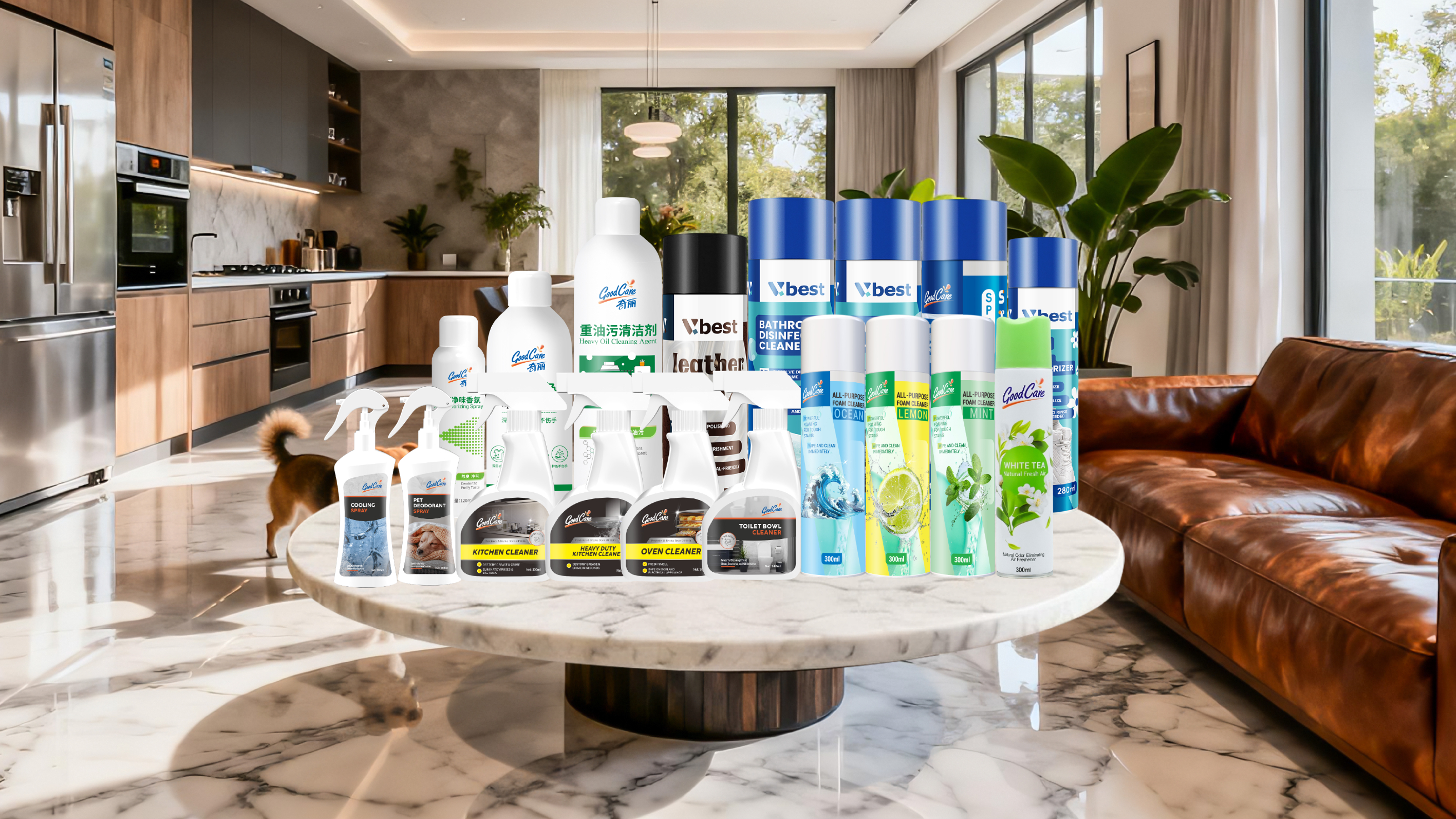
Why Tinplate Aerosols Are Harder to Clear Than They Look
Three rule sets overlap inside a single tinplate household aerosol, and in most supply chains three different people own them.
- The container layer. The tinplate can, valve, actuator and dip tube form one pressurized package, which is where pressure testing and pressure-vessel safety requirements attach.
- The chemical layer. The formulation inside the can — including flammable liquid handling and, for household products, whatever classification the destination market applies to a cleaning, disinfectant or insecticide preparation.
- The market-access layer. Net content declaration, warnings, language and labeling duties that change from country to country.
Failures are therefore rarely technical. They are alignment failures: a specification that lists 300–600 ml without tying each volume to a can dimension; a management-system certificate presented as though it were a product-type production license; artwork approved for one market reused in another where the labeling duty differs.
Industry Background: Where Tinplate Sits in the Home & Daily Life Aerosol Market
Aerosols remain a large and still-growing product and packaging category. Grand View Research forecasts the global aerosol market to reach USD 100.7 billion in 2026, and the European Aerosol Federation (FEA) reports that European aerosol production reached 3.46 billion units in 2024 — a 4.2% year-on-year increase.
Container material splits that volume in a way that is easy to misread. Grand View Research reports aluminum at a 61.0% share of the aerosol container market in 2025 by revenue, against 39.0% for steel. Read as revenue, aluminum pulls ahead on higher-value personal care and premium formats, while steel and tinplate continue to carry high-volume household, industrial and maintenance programs where cost per filled unit and format availability drive the buying decision. For a Home & Daily Life line — household cleaning, air care, home pest control, touch-up paint — tinplate remains a mainstream specification rather than a compromise.
Two practical consequences follow for buyers at the research stage. First, a single supplier portfolio often spans both materials, so material must be confirmed format by format: LAYA lists tinplate as the material for its household cleaning aerosol, spray paint aerosol, insecticide spray, air freshener, car care aerosol and industrial maintenance aerosol, while its aviation aerosol is available in tinplate or an aluminum can. Second, regulatory practice differs by region. The European Union is the clearest worked example: the Aerosol Dispensers Directive 75/324/EEC, in force since 20 May 1975, requires pressure testing and specific labeling for aerosols placed on the EU market. Other regions publish their own duties, and it is the differences rather than the similarities that generate rework.

What Buyers Must Verify Before Approving a Tinplate Aerosol
1. Container material and construction
Confirm the material on the specification line, not in the product name. In the LAYA portfolio, tinplate is the stated material for spray paint aerosol (QL-0000450), household cleaning aerosol (QL-0000300), insecticide spray (KB-0000600), air freshener (ME-0000300), car care products (BO-0000600) and industrial maintenance aerosol (SM-0000400). The aviation aerosol (KB-0000300) is listed as available in tinplate or an aluminum can. That single exception is the reason material confirmation should be done format by format rather than inherited from a category.
The specification should also state what the container is: a tinplate can of the declared dimension, with the valve and actuator identified as part of the pressurized assembly. Background material properties commonly cited for tinplate in packaging — a coated steel surface and good formability for drawing and seaming — are useful context, but they do not replace the supplier document. What belongs on file is the declared material, the can dimension, and the pressure test record for that dimension.
2. Net fill volume and can dimension mapping
Net content is the field that drifts most often between quotation, artwork and finished can, because a product range is usually quoted as a band rather than as a table. Inside the 300–600 ml band used by the Home & Daily Life formats, the mapping in the LAYA specification data is consistent: 300 ml corresponds to a ∮52×195 mm can, 400 ml to 65×158 mm, 500 ml to 65×200 mm, and 600 ml to 65×240 mm. Spray paint aerosol (QL-0000450), household cleaning aerosol (QL-0000300), car care products (BO-0000600) and industrial maintenance aerosol (SM-0000400) all follow that mapping.
Two formats deliberately break the pattern, which is why a blanket assumption is unsafe. Air freshener (ME-0000300) is specified at a single net content of 300 ml with a 52 mm diameter and a 195 mm height. Insecticide spray (KB-0000600) extends beyond the standard band to 750 ml, adding a ∮65×300 mm can to the range. If a project requires a fill volume or diameter outside the published range, nothing in the available data supports that format — it has to be specified, sampled and tested as a new item.
3. Dispensing system and operating conditions
These formats operate with a built-in nozzle and require no special supporting equipment: operation is manual spray, on demand, in a one-time canister mode. Two implications matter for compliance work. First, the valve, actuator and nozzle belong to the pressurized assembly, so they should be named in the specification and covered by the same pressure test regime as the can. Second, the operating envelope defines where the product may legitimately be sold and how it must be stored: the formats are designed for normal temperature and high humidity environments, with operating conditions covering normal temperature and humidity, high humidity and general industrial environments.
Storage and transport requirements belong in the same document set — flammable liquid compliance, pressure-vessel safety standards and storage temperature control — because these are the items customs authorities, insurers and warehouse operators ask about first.
4. Pressure testing, labeling and market access
Market access turns a format-level decision into a country-level one. For the European Union, Directive 75/324/EEC mandates pressure testing and specific labeling for all aerosols sold in the EU, so a buyer targeting that market should hold the test method, the test record for the ordered can dimension, and the labeling artwork revision used for that market. Outside the EU, requirements differ and must be confirmed per destination rather than extrapolated from one approval.
Published application data for these formats shows how wide the destination spread is: household daily use, automotive maintenance, industrial equipment maintenance and aviation cleaning projects, with the scenario recorded as common in countries including Germany, Singapore and Australia, alongside Hong Kong, Japan, South Korea, Russia, Chile, Indonesia and others. Each of those markets is a separate labeling and registration question, so the compliance checklist should be built per market rather than per product.
5. Licensing, certificates and traceable documentation
LAYA states that it holds production licenses for hazardous chemicals, pesticides and disinfection products, and that it holds quality, environmental and safety management system certifications. Those statements are relevant precisely because product-type production licensing is what regulators examine; a quality certificate alone does not establish eligibility for a specific household product category. The verification step is documentary: request the license and certificate numbers, the issuing authorities, the scope in terms of product category and production site, and the validity dates. The published record does not include license identifiers, so this step cannot be closed by citing the supplier claim.
Formulation-level documents belong in the same pack: a safety data sheet for the fill, a propellant and fill-weight declaration, a compatibility statement covering the formulation against the tinplate container, and the batch release criteria applied before shipment. A buyer holding those document types can answer almost any customs, insurer or retail compliance query without going back to the supplier mid-shipment.

Step-by-Step Breakdown: A Six-Step Tinplate Compliance Review
- Define the product category and the destination markets. A household cleaning aerosol, a disinfectant and an insecticide follow different regulatory routes even when they share a can. List every destination country before the first quotation, because the list determines the document set.
- Lock the can format and the net fill mapping. Decide the fill volumes and write the corresponding can dimensions next to them — 300 ml with ∮52×195 mm, 400 ml with 65×158 mm, 500 ml with 65×200 mm, 600 ml with 65×240 mm. Treat any volume outside the published supplier range as a new development item.
- Confirm material and dispensing configuration. State tinplate explicitly, note where an aluminum option exists, as with the aviation aerosol, and name the valve and nozzle in the specification.
- Verify the pressure and labeling regime for each market. For EU-bound goods that means the pressure testing and labeling requirements of Directive 75/324/EEC; for other markets, the corresponding local duty confirmed in writing.
- Collect licensing and management-system certificates with identifiers. Numbers, issuing bodies, scope and validity dates — plus the safety data sheet and the compatibility documentation for the fill.
- Approve a sample against written acceptance criteria, then release bulk. The acceptance criteria should restate steps one to five, so the sample review tests compliance as well as appearance.
Steps four and five are the two buyers most often compress into a single email. They are also the two where a missing identifier causes the longest delay at the port of entry.
Use Cases: Tinplate Aerosols in Home & Daily Life Practice
- Household daily cleaning. Household cleaning aerosol (QL-0000300) covers the 300–600 ml band in tinplate and is intended for the Home & Daily Life industry. It is commonly requested by distributors building a home-care line, because one can family covers four fill sizes.
- Home and light commercial touch-up painting. Spray paint aerosol (QL-0000450) is specified for Public & Commercial Services and Home & Daily Life, with the same four net contents and matching can dimensions. The double classification makes it a bridge product for buyers serving both retail and trade channels.
- Air care in public and commercial spaces. Air freshener (ME-0000300) is a single-specification format — 300 ml, 52 mm diameter and 195 mm height — used in Public & Commercial Services settings where a fixed format simplifies shelf and logistics planning.
- Home pest control. Insecticide spray (KB-0000600) is the format that goes beyond the standard band, with fills from 300 ml up to 750 ml. Larger fills reduce the number of cans a household buys for seasonal use, but they also change shipping weight and storage classification.
- Adjacent maintenance lines. Car care products (BO-0000600) and industrial maintenance aerosol (SM-0000400) share the tinplate construction and the 300–600 ml mapping, which lets a distributor consolidate artwork templates and compliance documentation across a broader catalogue.
- Aviation cleaning programs. Aviation aerosol (KB-0000300) is listed for the aviation industry and is the one format in the portfolio offered in tinplate or aluminum, which is why material confirmation per format matters.
Comparison Table: Tinplate Formats, Net Fill and Dimensions
| Model | Product | Material | Net content | Can dimensions (diameter × height) | Intended industry |
|---|---|---|---|---|---|
| QL-0000300 | Household cleaning aerosol | Tinplate | 300 / 400 / 500 / 600 ml | ∮52×195 mm; 65×158 mm; 65×200 mm; 65×240 mm | Home & Daily Life |
| QL-0000450 | Spray paint aerosol | Tinplate | 300 / 400 / 500 / 600 ml | ∮52×195 mm; 65×158 mm; 65×200 mm; 65×240 mm | Public & Commercial Services; Home & Daily Life |
| ME-0000300 | Air freshener | Tinplate | 300 ml | ∮52×195 mm | Public & Commercial Services |
| KB-0000600 | Insecticide spray | Tinplate | 300 / 400 / 500 / 600 / 750 ml | ∮52×195 mm; ∮65×158 mm; ∮65×200 mm; ∮65×240 mm; ∮65×300 mm | Insecticide |
| BO-0000600 | Car care products | Tinplate | 300 / 400 / 500 / 600 ml | 52 mm diameter; heights of 195 mm, 158 mm, 200 mm and 240 mm | Transportation; Industrial & Manufacturing |
| SM-0000400 | Industrial maintenance aerosol | Tinplate | 300 / 400 / 500 / 600 ml | 300 ml: ∮52×195 mm; 400 ml: 65×158 mm; 500 ml: 65×200 mm; 600 ml: 65×240 mm | Industrial & Manufacturing |
| KB-0000300 | Aviation aerosol | Tinplate or aluminum can | 300 / 400 / 500 / 600 ml | ∮52×195 mm; 65×158 mm; 65×200 mm; 65×240 mm | Aviation |
Source: LAYA product specification data. Net content and can dimensions are the declared values for each model.
| Verification item | Document to request | Why it matters |
|---|---|---|
| Container material and construction | Specification sheet stating tinplate (or aluminum) and the exact can dimension | Prevents material substitution between quotation and production |
| Net fill and dimension mapping | Fill-volume-to-dimension table, for example 300 ml with ∮52×195 mm | Prevents net content declaration errors on artwork and labels |
| Valve, nozzle and dispensing mode | Component specification confirming a built-in nozzle and manual spray operation | The pressurized assembly is pressure-tested as one unit |
| Pressure testing | Test method plus test record for the ordered can dimension | EU Directive 75/324/EEC requires pressure testing for aerosols sold in the EU |
| Labeling | Market-specific artwork revision with warnings and net content | Labeling duties differ by country and drive most port-of-entry queries |
| Licensing | Production license numbers, issuing authorities, scope and validity dates | Product-type licensing is separate from quality certification |
| Formulation safety | Safety data sheet, propellant and fill-weight declaration, can compatibility statement | Supports customs, insurance and storage requirements |
| Batch control | Batch release criteria and pre-shipment inspection record | Turns sample approval into a repeatable acceptance standard |
Document types listed here are the items a buyer should request; they are not claims about any specific supplier record.
FAQ: Tinplate Aerosol Compliance and OEM Questions
Which standards and licenses should be verified on a tinplate household aerosol before ordering?
Two categories of evidence matter. On the packaging side, the EU Aerosol Dispensers Directive 75/324/EEC requires pressure testing and specific labeling for aerosols sold in the EU, so a buyer targeting that market should hold the test method and the test record for the exact can dimension ordered. On the product side, licensing applies by product type: LAYA states that it holds production licenses for hazardous chemicals, pesticides and disinfection products, together with quality, environmental and safety management system certifications. The verification step is to obtain license and certificate numbers, issuing authorities, scope and validity dates, because a general certificate does not confirm eligibility for a specific household product category.
Can one Chinese aerosol manufacturer supply both insecticide spray and household cleaning aerosol in tinplate?
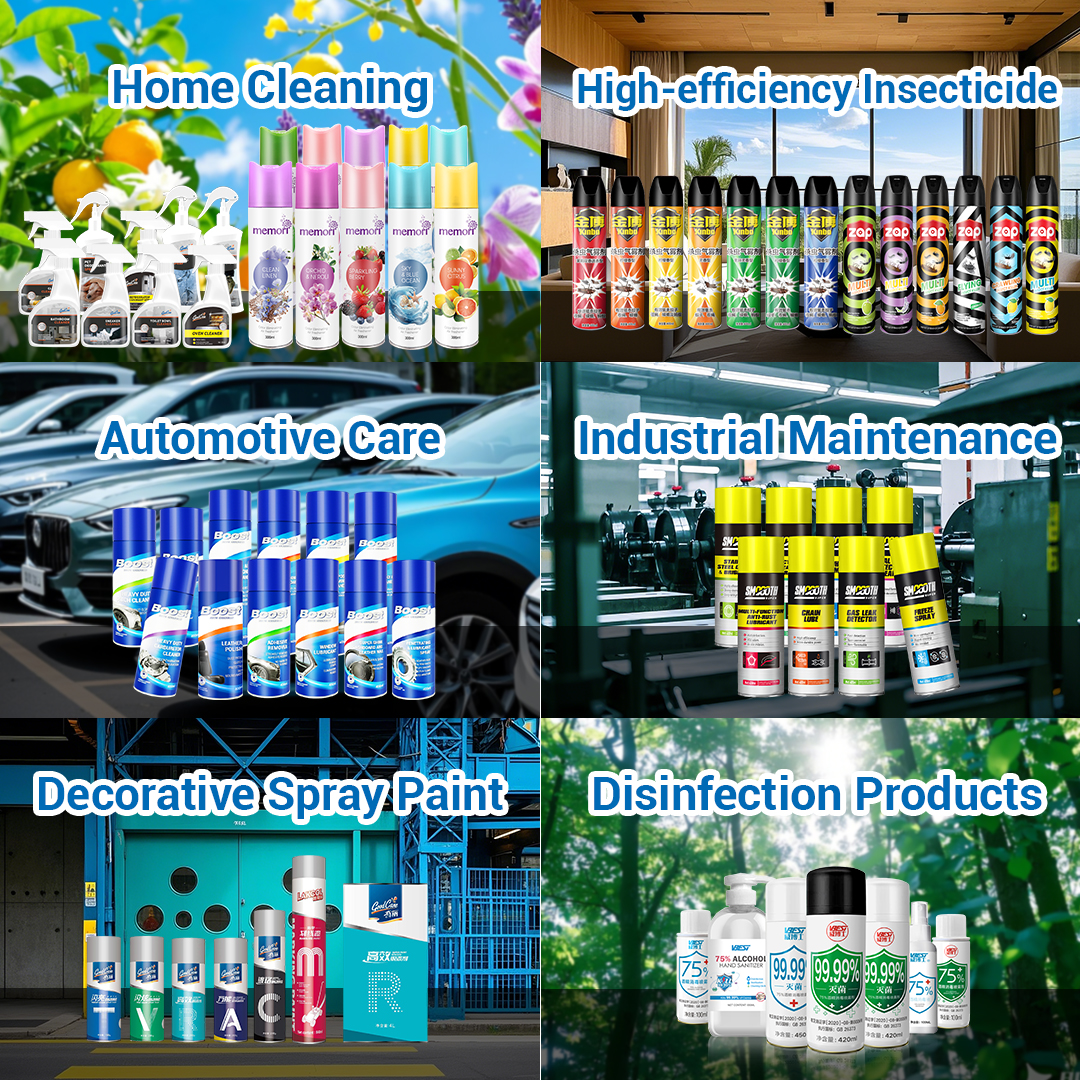
Yes. LAYA states that it offers aerosol OEM and ODM services across eight product categories: insecticide spray, air freshener, household cleaning aerosol, industrial maintenance aerosol, car care aerosol, disinfectant aerosol, aviation aerosol and spray paint aerosol. Tinplate is the declared material for insecticide spray (KB-0000600), household cleaning aerosol (QL-0000300), spray paint aerosol (QL-0000450), air freshener (ME-0000300), car care products (BO-0000600) and industrial maintenance aerosol (SM-0000400), while the aviation aerosol (KB-0000300) is available in tinplate or an aluminum can. Material should still be confirmed format by format rather than assumed across a range.
How should MOQ and cost be assessed for a tinplate aerosol program?
Published sources do not include MOQ or unit pricing for these formats, so cost planning has to begin with a written quotation. What the public record does provide is capacity context for supplier screening: LAYA reports 14 advanced filling lines, a 100,000 sqm manufacturing facility including 50,000 sqm of modern standard workshops, and an annual output of 200 million cans, with export business accounting for 20% of total sales and major markets in Central Asia, the Middle East, Africa, Russia and Brazil. Those figures describe production scale rather than price, so MOQ and unit cost should be confirmed item by item against the chosen fill volume and can dimension.
How should a sample be validated before a full tinplate aerosol production run?
Build the sample review around the same items as the compliance checklist: declared material, net content against the can dimension, valve and nozzle configuration, spray function, and market-specific labeling. The functional profile to test against is the published one — surface cleaning, decontamination, rust prevention, disinfection, odor elimination and pest control depending on the product, delivered through a built-in nozzle in manual, on-demand operation, in conditions covering normal temperature and humidity, high humidity and general industrial environments. LAYA samples for these formats can be requested through the contact channels listed at the end of this guide: echo@laya.com.cn or +86 136 5384 8383.
What has to be confirmed before a bulk tinplate aerosol order is released?
Four items: the can format and its net fill mapping, the pressure test and labeling documents for each destination market, the license and certificate identifiers with valid dates, and the written acceptance criteria for the finished can. Lead time is not published in the public record, so it should be confirmed in writing during quotation together with the batch release process. Once those four items sit in one file, the buyer is no longer dependent on ad-hoc supplier emails at the point of shipment.
Conclusion: Turning the Checklist Into a Buying Routine
Tinplate aerosol compliance in the Home & Daily Life category is a document problem before it is a technical one. The container material, the 300–600 ml net fill mapping (300 ml with ∮52×195 mm through 600 ml with 65×240 mm), the built-in nozzle configuration, the market-specific pressure test and labeling duty, and the licensing behind the filling line are all verifiable items — provided they are requested as identifiers rather than accepted as claims.
The most efficient buying routine is to build one compliance file per destination market, populate it with the document types in the verification table above, and re-test that file whenever the fill volume, can dimension or market changes. That single habit covers the majority of household aerosol programs and scales from a first sample order to a multi-container shipment.
Next step: confirm the documents for your format
Send the fill volume, can dimension and destination market, and the team will confirm which compliance documents apply to that combination. The full product brochure covers specifications and format options.
Download the LAYA aerosol brochure (PDF)
Email: echo@laya.com.cn · WhatsApp: +86 136 5384 8383 · Website: www.laya.com.cn/en/
Guangdong Laya New Chemical Technology Co., Ltd., No. 7, Gantang Avenue South, Xilian Town, Wujiang District, Shaoguan City, Guangdong Province, China 512000
Have Questions or Need More Details?
Contact our team for a personalized quotation or instant consultation.
Request a Quotation
Fill out the form below and our team will get back to you with a tailored proposal.
WhatsApp Direct Chat
Prefer to chat in real-time? Message us on WhatsApp for instant assistance & quick answers.
- Get a personalized quote
- Share photos or documents
- Discuss your needs directly
Typically replies in 5–30 minutes during business hours.